TURKISTAN TIMES, 6 June 2026 — The integrity of international efforts to combat state-sponsored forced labor is facing an unprecedented threat from Beijing’s expanding digital infrastructure. Recent industrial findings indicate that market exposure to prohibited cotton from East Turkistan has rapidly rebounded to pre-sanction levels, exposing a massive gap between official supply chain documentation and reality. This systemic evasion severely undermines Western import bans, as Çhinese state-backed logistics networks increasingly obscure the true origin of forced labor commodities before they reach global markets.
According to an analysis published on May 6, 2026, in China Brief by the Jamestown Foundation by researcher Jonah Reisboard, the United States’ Uyghur Forced Labor Prevention Act (UFLPA) is being systematically eroded by China’s sophisticated trade platforms. The UFLPA operates on a legal presumption that all goods produced "wholly or in part" in the Xinjiang Uyghur Autonomous Region (XUAR) involve forced labor, requiring importers to provide clear, convincing evidence to the contrary. However, newly published data reveals that corporate supply chain tracing initiatives and western border customs are no longer stopping the flow of these illicit products.
The root of this enforcement crisis lies in Beijing's tight grip on global shipping data through platforms like LOGINK, a state-operated entity that now accesses over 90 percent of global maritime shipping data. Concurrently, Alibaba’s eWTP (electronic world trade platform) and its logistics arm, Cainiao Network Technology, dominate overland and airport trade. Because these platforms facilitate the freight shipment of goods sourced directly within the XUAR, they hold the exact traceability data needed to verify forced labor, yet they keep it entirely out of reach of Western law enforcement.
This concentration of information allows Beijing to weaponize its domestic legal framework against international scrutiny. Recent updates to China’s Anti-Foreign Sanctions Law and new provisions on supply chain security empower the state to restrict data transfers to foreign entities and penalize officials who enforce the UFLPA. This legally binds Chinese supply chain actors to non-cooperation, effectively acting as an informational "kill switch" that blocks Western customs authorities from verifying raw material origins.
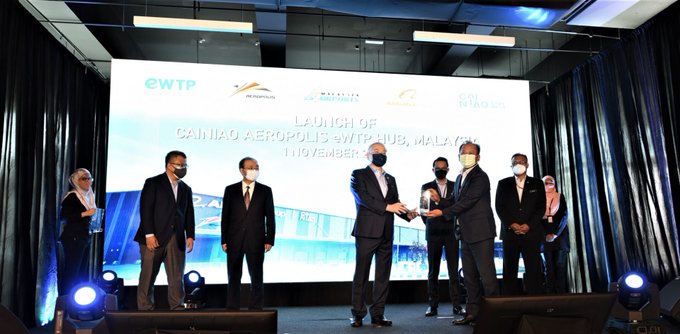
Beyond data withholding, this Chinese digital trade network leverages strategic global transshipment hubs to disguise the illicit flow of goods from East Turkistan. The report underscores a direct overlap between major Cainiao facilities and countries flagged for high volumes of UFLPA customs detentions, such as Vietnam, Malaysia, Thailand, Indonesia, Ethiopia, and Mexico. For instance, a surge in direct cargo flights from Urumqi to the Cainiao eHub in Liège, Belgium, allows Chinese goods to bypass traditional U.S. trade controls by handling all customs clearance directly through the opaque eWTP platform.
Furthermore, Alibaba’s expansion drastically reduces trade compliance friction, directly undermining the comprehensive inspections required by the UFLPA. In hubs like Kuala Lumpur and across various African nations like Rwanda and Ethiopia, eWTP has optimized customs clearance down from 48 hours to just 1.5 hours, processing 99 percent of packages in mere seconds. This push toward completely "paperless environments" eliminates multiple physical inspections, effectively locking critical customs data inside Chinese digital platforms and cutting off access for independent due diligence analysts.
Compounding this opacity is Beijing's global deployment of "smart customs" solutions powered by advanced Artificial Intelligence (AI). Utilizing systems like Huawei's "customs smart gate" and DeepSeek AI, manual regulatory checks are replaced by automated processes that reduce clearance times to nine seconds. As these AI tools are adopted across Latin America and the Middle East, they embed the Chinese Communist Party's censorship norms directly into customs decisions, ensuring that sensitivities surrounding East Turkistan are systematically ignored and that the world's supply chain data is held hostage by default.