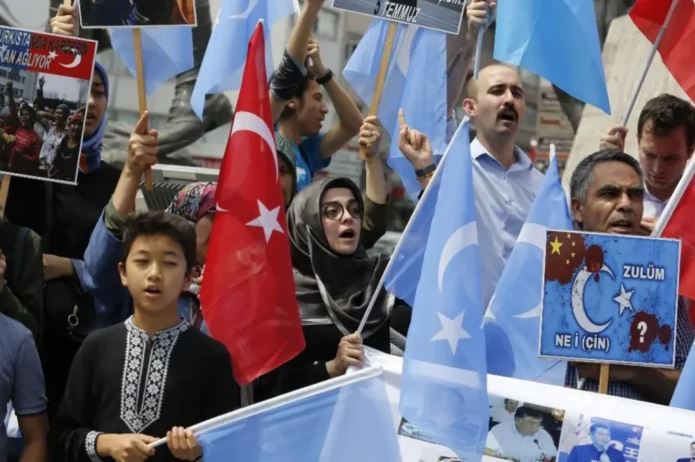
Turkish authorities have arbitrarily labeled Uyghur refugees as security threats, detained them and deported some to third countries where they face the risk of return to China, a pattern Human Rights Watch (HRW) said has intensified as Turkey’s ties with Beijing have improved.
Turkish authorities have used so-called “restriction codes,” administrative security markers added to immigration files under Turkey’s law on foreigners, to label Uyghur refugees as public security risks without clear evidence. A complaint from a neighbor or other third party, even if later dismissed, can trigger the designation, according to HRW.
Once a code is applied, individuals can be denied residence permits and other legal status, detained in deportation centers and treated as irregular migrants subject to removal.
HRW said it had reviewed multiple court decisions in which Turkish judges ruled that the prohibition on returning people to places where they face serious harm did not apply to Uyghurs, despite extensive documentation of abuses faced by Uyghurs returned to China, particularly those coming from countries Beijing considers sensitive, including Turkey.
The report cited the case of a Uyghur man deported from Turkey in 2019 to the United Arab Emirates, which has an extradition treaty with China. He later left the UAE and traveled through several countries to reach safety, but was detained in two transit countries after Chinese officials pressured local authorities to return him to China, HRW said.
The rights group said Chinese authorities have also submitted lists of people they label as terrorists to Turkish officials, including individuals accused of peaceful activism or expressing Uyghur identity. Some people on those lists have later been assigned restriction codes in Turkey, the report said.
Since late 2016 Uyghurs and other Turkic Muslims in China’s northwestern Xinjiang region have been subjected to mass arbitrary detention, torture and other abuses that rights groups and United Nations experts have described as crimes against humanity. Turkey has long served as a refuge for Uyghurs due to shared linguistic and cultural ties.
The group said Turkish immigration authorities have pressured, and in some cases forced, Uyghur detainees to sign documents agreeing to “voluntary return,” a practice also reported among detainees from Syria and Afghanistan.
Under Turkish law individuals can appeal deportation decisions. However, a lawyer cited by HRW said judges often rule against applicants when restriction codes appear in case files, regardless of the underlying evidence.
İstanbul remains home to the world’s largest Uyghur diaspora, where many have built businesses, cultural centers and community networks. Many Uyghurs consider Turkey a second homeland and say they feel free to express their identity there.
HRW called on Turkish authorities to end the arbitrary use of security codes, halt deportations that expose Uyghurs to the risk of return to China and uphold international obligations to protect refugees from refoulement.