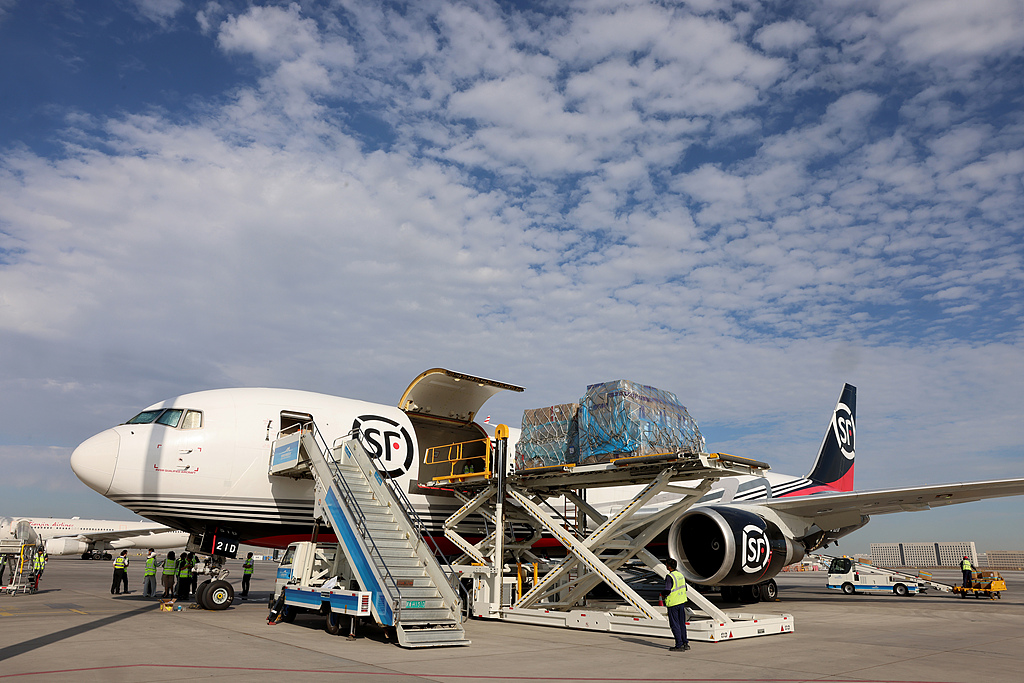
Cargo is being loaded onto a plane at the airport in Urumqi on August 15, 2024, ahead of its departure for Budapest, capital of Hungary. Photo: VCG
Turkistan Times - 11 January 2026
A recent report by the Global Times highlights a significant expansion of Chinese air carriers into the European Union, specifically noting new cargo routes originating from Urumqi Tianshan International Airport. While the report frames the new Urumqi-Zurich and Urumqi-Belgrade routes as a "new air bridge" to enhance trade efficiency, the geographical origin of these flights places them directly in the crosshairs of the U.S. Uyghur Forced Labor Prevention Act (UFLPA) and international human rights determinations.
East Turkistan and the Determination of Genocide
The region, which Uyghurs refer to as East Turkistan, is at the center of a profound humanitarian crisis. The U.S. Department of State has formally determined that the Chinese government is committing genocide and crimes against humanity against the predominantly Muslim Uyghurs and other ethnic minority groups in this region. By launching direct cargo routes from Urumqi—the administrative capital of this region—Chinese carriers are effectively streamlining the export of goods from an area defined by systemic oppression.
The UFLPA Presumption and Risks for European Brands
The UFLPA operates under a "rebuttable presumption" that any goods produced wholly or in part in the region are made with forced labor. While the Global Times focuses on "e-commerce goods," the reality is that major European brands in the textile and solar energy sectors are increasingly being scrutinized for their indirect links to Uyghur forced labor.
East Turkistan is a global powerhouse for cotton and polysilicon (a key component in solar panels). These 49-ton shipments departing Urumqi likely contain materials that "contaminate" the supply chains of European companies. For a brand in Germany or Switzerland, utilizing these efficient new routes may seem economically sound, but it creates a massive legal and reputational risk if those goods are later found to be tied to forced labor during U.S. customs entry or under emerging EU due diligence laws.
Logistical Efficiency vs. Ethical Compliance
The report quotes industry figures praising the reduction in "transportation risks" and logistics costs. However, in the current geopolitical climate, "risk" has been redefined. For global importers, the risk of a shipment being seized under the UFLPA—or being associated with the ongoing genocide in East Turkistan—far outweighs the savings of a cheaper flight.
Conclusion
While Chinese carriers celebrate the technical expansion of their EU footprint, the reliance on Urumqi as a logistics hub remains a major friction point. As long as the UFLPA remains the gold standard for enforcement and the evidence of atrocities persists, these "air bridges" will be viewed by the international community not as symbols of progress, but as high-risk conduits for products born out of state-sponsored forced labor.