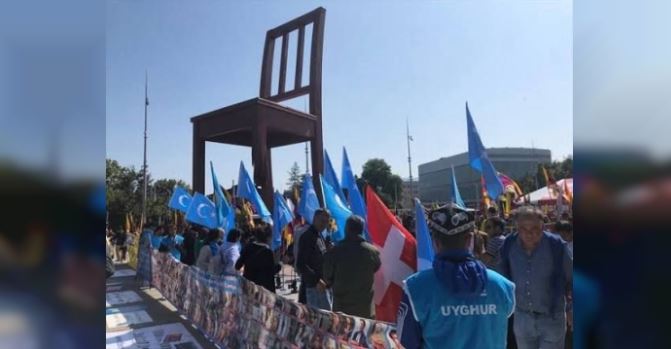
GENEVA — February 24, 2026 — As the 61st session of the UN Human Rights Council convenes in Geneva, a powerful coalition of 26 civil society organizations, including the International Service for Human Rights (ISHR) and the World Uyghur Congress, has issued a stark ultimatum to UN High Commissioner for Human Rights Volker Türk: The time for quiet diplomacy is over.
The coalition is demanding that during his global update on February 27, Türk must provide a detailed public account of his office’s efforts to investigate what multiple UN bodies have already characterized as potential crimes against humanity and genocide in the Uyghur region.
A Legacy of Inaction
It has been over three years since the UN Human Rights Office (OHCHR) released its landmark 2022 report, which documented staggering evidence of torture, forced labor, and mass internment of Uyghurs and other Turkic minorities. Since that time, however, the UN’s momentum appears to have stalled. While the report provided a roadmap for accountability, High Commissioner Türk has shared frustratingly little information regarding any tangible progress in holding Chinese officials responsible.
For the Uyghur diaspora, this silence is not merely a bureaucratic delay; it is a painful enabler of impunity. "The Human Rights Council exists to hold perpetrators accountable," the joint statement emphasized. "Both the Council and the OHCHR are long overdue in taking concrete steps to address the scale of these international crimes."
Deepening Repression and the Shadow of Transnational Terror
The urgency of this call is underscored by a chilling reality: Beijing’s repression is not only continuing but evolving. Since the conclusion of the previous Council session in October 2025, Chinese authorities have intensified their campaign against dissent. Religious leaders, journalists, and peaceful activists continue to be disappeared into a vast, opaque detention system, often denied essential medical care.
Furthermore, the reach of the Chinese state now extends far beyond its borders. The coalition highlighted the recent conviction of the father of exiled pro-democracy activist Anna Kwok in Hong Kong. This act of "collective punishment," carried out under the draconian Article 23 of the Basic Law, represents a terrifying escalation of transnational repression. By targeting the elderly parents of those who speak out abroad, Beijing is sending a clear message: no one is safe, and silence is the only price of protection for one's family.
A Test of Moral "Ambition"
The coalition pointed out a glaring contradiction in the High Commissioner’s recent rhetoric. On January 30, 2026, Türk urged the international community to be "ambitious" in negotiating a new treaty on crimes against humanity, calling it a "once in a generation opportunity" for justice.
"High Commissioner Türk now has his own opportunity to be ambitious," said Sophie Richardson, Co-Executive Director of the Network of Chinese Human Rights Defenders (CHRD). "He must make it clear to Beijing that its atrocity crimes will be investigated. Just as importantly, he has a chance to show the generations of victims and survivors that they have not been forgotten by the very institution built to protect them."
The Call for Transparency
The 26 signatory organizations—ranging from Human Rights Watch to the Campaign for Uyghurs—are not merely asking for sympathy. They are demanding a transparent outline of the UN’s investigative strategy. They are calling for an explicit demand that Beijing repeal the vague "picking quarrels and provoking trouble" charges used to silence critics and end the systematic "medical neglect" used as a tool of torture against detained defenders.
As the Human Rights Council session continues through March 31, the eyes of the global Uyghur community are on Geneva. For them, the UN’s credibility hangs in the balance. If the world’s highest human rights official cannot name and investigate a genocide in real-time, the promise of "Never Again" risks becoming a hollow echo in the halls of the United Nations.
The joint statement was signed by 26 civil society organisations. Read the statement and full list of signatories here.