For immediate release
April 3, 2026, UHRP
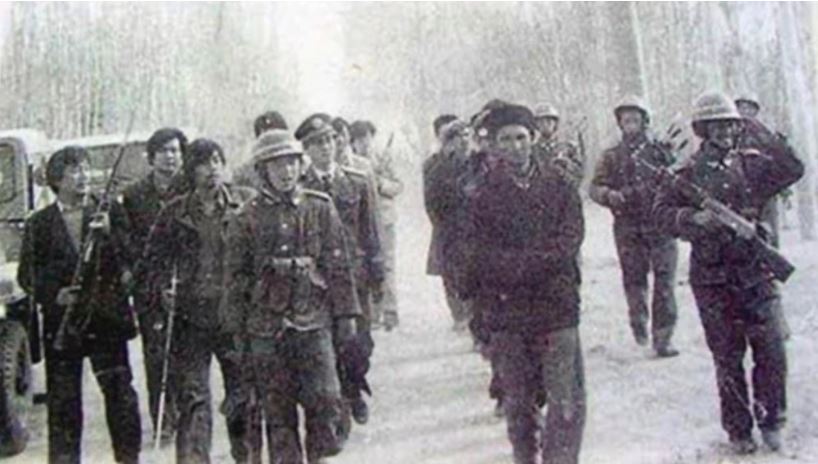
Thirty-six years ago, on April 5, 1990, protests in Barin Township near Kashgar were met with overwhelming state force, leaving a lasting mark on Uyghur collective memory. Known as the Barin Uprising, led by Zeydin Yusup, the events over subsequent days resulted in the deaths of dozens of Uyghur demonstrators, estimated at around 50 or more, while hundreds to thousands were detained. At least six individuals were executed in the aftermath, though the full extent of the repression has never been publicly disclosed.
The demonstrations emerged from grievances over policies that curbed religious life and imposed strict controls on Uyghur families, particularly women’s reproductive autonomy. In the weeks leading up to April, residents gathered to protest restrictions on mosque activity and broader limitations on religious expression. A key grievance was the refusal by authorities to permit the restoration of a local mosque, reflecting a wider ban on construction and repair of religious buildings.
On April 4, groups of Uyghurs assembled in village mosques, voicing demands for the protection of their rights. The following day, a peaceful prayer gathering of around 200 people near government offices was violently dispersed. Security forces, numbering over 1,000 and including multiple branches of the Chinese state, were lethally deployed. Eyewitness accounts and later reporting indicate that protesters were fired upon, including as they attempted to flee.
The lack of independent access to the region has made it impossible to determine the precise number of casualties. Early international media reporting often echoed official narratives portraying the unrest as a threat to state stability. However, accounts from Uyghurs emphasize the role of coercive policies, including forced sterilizations and late-term abortions, which contributed to widespread fear and anger. For many, these measures represented an existential threat to Uyghur identity.
The crackdown that followed extended far beyond Barin. While official figures acknowledged hundreds of detentions, human rights organizations have suggested that arrests reached into the thousands across the region. A 1999 Amnesty International report records 27 cases of Uyghurs imprisoned for alleged involvement in the Barin Uprising, such as Ibrahim Ahmed, who was handed a life sentence and jailed in Ürümchi. Several individuals were sentenced to death in trials held in 1990 and 1991, though the total number of executions remains unknown.
Barin marked a significant shift in state policy. The relatively more permissive environment of the 1980s gave way to intensified repression, including renewed use of public trials and executions. In the years that followed, similar responses were seen in other Uyghur communities, establishing a pattern of lethal crackdowns on dissent.
“Today, the Barin Uprising is widely regarded as an early warning of the far-reaching abuses that have since been documented in East Turkistan,” said UHRP Executive Director Omer Kanat. “Mass detention, forced labor, cultural suppression, and intrusive population control policies have drawn condemnation from governments and international bodies, some of which have concluded that these actions constitute genocide and crimes against humanity.”
As UHRP marks this anniversary, it underscores the importance of remembering Barin not only as a historical incident but as a key moment in understanding the course of Chinese state policies toward Uyghurs. The legacy of April 1990 continues to resonate, highlighting the urgent need for accountability and the protection of fundamental human rights.