By Muhammed Şamil Gençosmanoğlu
Published: April 4, 2026
"The Breaking Point of East Turkestan"
It would not be an exaggeration to say that the last century of East Turkestan is a history of massacres. Whenever China found an opportunity or fabricated an excuse, it applied pressure on the Muslim people of East Turkestan, preventing them from raising their heads and obstructing their freedom struggles. A free East Turkestan is a threat to China. Why? Because it would mean China could no longer assimilate the Muslim Turkic society or exploit the underground and surface resources of that geography.
The Islamic movement, led by pioneers Zeyneddin Yusuf, Ishaq Hoshur, Muhammed Turdi, and Muhammed Tursun, was slowly organizing and struggling for the awakening and freedom of the nation. On the other hand, the Chinese government was settling Han Chinese to change the demographic structure in the region, specifically beginning mandatory birth control (reproductive restrictions) practices, and religious oppression was increasing day by day. Long-standing pressures, religious restrictions, and population policies created serious unrest in the region. In particular, forced birth control and abortion practices were among the primary reasons for the public's reaction. Zeyneddin Yusuf and his comrades called the people to protest in response to these developments. Chinese security forces and the army launched a large-scale operation in the area.
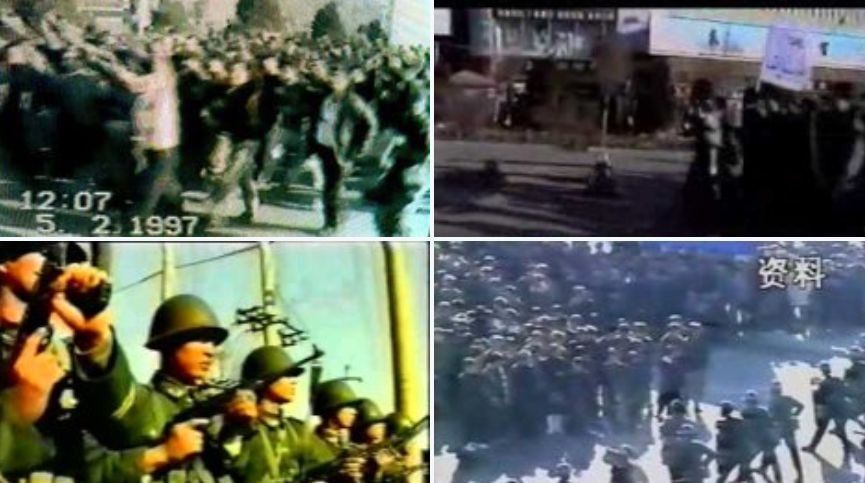
This operation turned into a massacre. This massacre took place on April 5, 1990, in Barin Township, Akto County, Kashgar Prefecture of East Turkestan. This event is known as the Barin Uprising or the Barin Massacre and is remembered among Muslim Turks as a day of significant resistance and sorrow.
Humanity is not merely a biological entity but also a "being of meaning." This meaning crystallizes within a specific geography and historical process. In our conception of civilization, "homeland" is not just a piece of land where one resides; it is the embodiment of an awareness, a faith, and an intention. East Turkestan, the eastern side of ancient Turkestan, is one of the "founding" centers of this awareness. To read the events of April 5, 1990, in Barin as a mere political rebellion or a military suppression operation is to miss the depth of the issue. Barin is a rejuvenation of memory and the "I am here" cry of an existential will.
The events unfolded as follows: On April 5, 1990, coinciding with the month of Ramadan, the Muslim Uyghur Turkic people living in Barin gathered peacefully in front of the municipal building to protest the oppressive policies applied by the Chinese administration (demographic changes, restrictions on religion and culture, inequalities).
The protesters faced armed intervention from Chinese gendarmerie and soldiers. Following this intervention, the people began to resist (with simple tools like sticks and shovels). According to what a brother from East Turkestan told me, the Chinese side responded with excessive force: thousands of soldiers, tanks, helicopters, and planes were used. The clashes lasted for several days. According to the accounts of our Uyghur Turkic brother:
- Thousands of Uyghurs (with some claims exceeding 10,000) "fell as martyrs." Pioneer names like Zeyneddin Yusuf, Ishaq Hoshur, Muhammed Turdi, and Muhammed Tursun were among them.
- There are testimonies that the bodies were collected in trucks and buried in mass graves.
- The event went down in history as the bloody suppression by China of one of the first major mass resistances in the region.
This incident is seen as an early example of China's long-term oppression and assimilation policies in East Turkestan (later continuing with concentration camps, forced labor, and cultural erosion). Barin is not just a geographical point; it was the site of the outcry of the Turkic-Islamic spirit—that ancient civilization that has held the pulse of the Silk Road for centuries—proclaiming "I exist!" against the most ruthless ideological monster of the 20th century.
Barin is a small township in Akto County, Kashgar, with a population of 20,000. The Chinese occupation force that arrived to suppress the demonstrations there numbered 22,750 personnel. A fully equipped army with helicopters and heavy weaponry, facing a people responding with simple tools like pickaxes, shovels, sticks, and hoes. Quite a "fair"(!) distribution, isn't it?
The event in Barin is the result of tension reaching a breaking point. Forced population policies, restrictions on religious practices, and the narrowing of cultural life did not only create physical pressure; they also narrowed the possibility for people to find meaning in their own existence. At this point, what we call resistance ceases to be a rebellion in the classical sense and turns into a survival reflex of existence. This is the human way of saying, "I am here and I exist within my own meaning," which is the desire to be free and hür (independent).
Pioneer names like Zeyneddin Yusuf, Ishaq Hoshur, Muhammed Turdi, and Muhammed Tursun became symbols of this defiance and resistance. They were neither Marxist revolutionaries nor Western-style nationalists; they were personalities where the "Alp" (hero) tradition of ancient Turkestan met with the meaning of jihad in Islam. The protesters had no weapons; they had faith. While the collapse of the Soviet Union loomed on the horizon (1991), China was testing its "socialist modernization" in the Uyghur geography. Looking back today, the Barin of the 1990s was the harbinger of the "re-education camps" of the 2010s, forced labor factories, and forced sterilizations.
This is an early stage of "cultural genocide." But at its deeper level, it is an attempt to erase the "memory" of a civilization. Because civilization is memory; and memory is language, faith, and place. What was destroyed in Barin was not just bodies; it was the thousand-year "umran" (civilization) of Turkestan, as Ibn Khaldun put it.
The silence of the Turkic world and the Islamic Ummah is a separate wound. Turkey in 1990 was busy with debates on the "Turkic-Islamic synthesis" during Özal’s era of liberal openings; but the gaze extending toward East Turkestan was silent, either dismissed as "internal affairs" or hushed in the name of "strategic balance." The Arab world was struggling with its own crises between oil and Western alliances. This silence shows how fragile the ideal of "unity" (vahdet) of the Ummah is. This Ummah had abandoned East Turkestan to its fate.
Today, assimilation policies continue in East Turkestan with mosques monitored by drones, DNA databases, and AI-supported surveillance. This should not instill too much hopelessness in us. Hope lies not in historical determinism but in the invincibility of human nature (fitra). If we recall the Quranic verse, "We have certainly created man into hardship" (Al-Balad: 4), hardship is the essence of existence itself. In Barin, that hardship rose to the rank of "martyrdom." Today, although the silent cry of the Uyghur Turks is drowned out by the indifference of the world media, it echoes in the deep layers of conscience. As a Muslim Turkic nation, we must hear this echo; because East Turkestan is the mirror of Anatolia. What is oppressed there may be destined for oppression here as well. Civilization is protected by the spirit, not by borders.
In today's modern world, information has become an "operational" tool. Disinformation carried out through media and social networks reduces the truth to an object of "perception." This is exactly where the process we call "investigation" (tahkik) must step in. To understand what happened in Barin, one must look not only at agency news but at the thousand-year journey of that geography. Data tells us numbers: "this many people died, this many soldiers were deployed." But these data do not constitute a complete answer to the question "why?".
The Barin massacre cannot be understood without passing through the filter of the "customs of conscience" (vicdan gümrüğü/tamojna). If information has no ethics, it is merely a sword in the hand of the powerful. The systematic pressure applied in East Turkestan is actually a "memory-breaking" operation. If you want to destroy a nation, first cut its ties with history, muddle its concepts, and alienate it from its essence. The violence displayed by China in Barin that day was not just a physical attack but also a blow to that people's "vision of the future." In our civilization, "justice" is putting everything in its proper place. Justice in the East Turkestan issue is for the original owners of that geography to be able to breathe freely upon their own spiritual roots. April 5, 1990, was a reflex against the attempt to cut this breath.
Those who lost their lives in Barin on April 5, 1990, are not "statistics" but witnesses to a cause. Their legacy imposes a responsibility upon us: to investigate the truth, to knead information with ethics, and to defend justice at any cost. History is not just what happened in the past; history is an energy that lives within today and shapes tomorrow. The energy of Barin is as much the cry of the oppressed as it is the faith that justice will one day absolutely manifest. Our duty is to fortify this faith with knowledge and to hold the dignity of remaining "human" above all kinds of technological and political pressure. Because the truest word spoken under the sky is this: Truth cannot be destroyed by pressure and oppression; it sprouts again when it finds the right time and the right heart. Barin is one of those sprouts. And that sprout will one day surely turn into a majestic plane tree.
Source: Yeni Haber