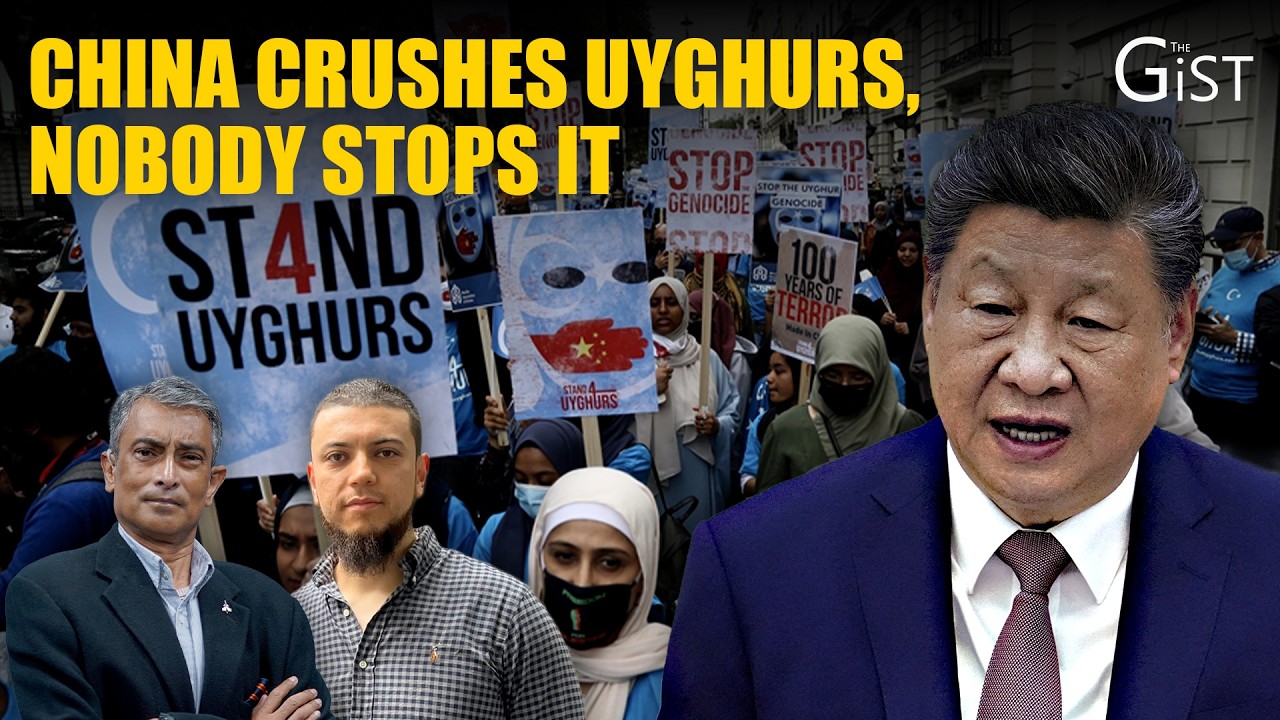
Speaking from Arlington, Virginia, the co-founder of Kashgar Times traces the crisis back to 1949, when the Chinese Communist Party took control of the region. Today, the world knows it as Xinjiang, a vast territory in northwest China bordering India, Pakistan, Central Asia and Russia. But for Hidayat, that framing itself is political. “We’ve been under occupation since,” he says.
What brought global attention over the past decade were reports of mass detentions. Hidayat claims Uyghurs and other Turkic Muslims have been sent to what he describes as “concentration camps,” prisons and forced labour facilities—often simply for being Muslim.
He argues the repression extends far beyond detention. Everyday expressions of faith, like beards, hijabs, even common Islamic greetings, are banned. Mosques, he says, have been demolished, closed, or repurposed.
Those that remain open in select areas operate under tightly controlled conditions, sometimes with what he alleges are “paid actors” to simulate religious activity for outsiders.
Fasting during Ramzan, once restricted, is now effectively prohibited, he claims. Surveillance is pervasive: authorities monitor homes, workplaces and schools to identify those observing religious practices. Even small acts like hesitating to eat during the day can trigger investigation.
Inside detention facilities, Hidayat recounts testimonies of ideological coercion. Detainees, he says, are forced to denounce Islam and pledge loyalty to the Chinese state and its leadership. One account he shares describes a woman beaten for invoking God while being assaulted, an incident he uses to underscore what he calls a systematic effort to erase religious identity.
Beyond religion, he alleges demographic engineering. Uyghur women, he claims, have faced pressure to marry Han Chinese men, while large-scale migration of Han populations into the region has altered its ethnic balance.
According to Chinese statistics he cites, Uyghurs now make up roughly half the population, down from overwhelming majorities in the past.
Politically, Hidayat rejects the label of separatism. Uyghurs seeking independence, he argues, see themselves not as seceding but as resisting occupation. He draws parallels with other contested territories, framing the issue as one of sovereignty rather than autonomy.
His account is also deeply personal. Members of his wife’s family were detained in 2017. Some have since been released, but contact remains tightly controlled and limited to monitored calls arranged through police intermediaries. Others, he says, remain in camps.
Despite the risks, Hidayat continues to speak out. He alleges that Uyghur activists abroad face transnational pressure, with threats directed at relatives back home to silence criticism.
For him, the stakes are existential: culture, faith and identity. Whether or not political change comes soon, he says, the effort must continue.
For more on a subject most of the world, including Muslim nations, find convenient to ignore, watch the full nterview.