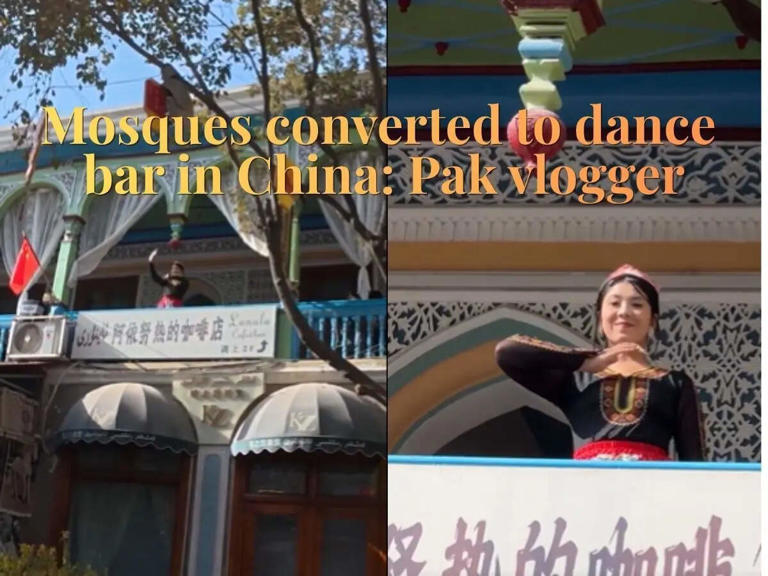
A Pakistani vlogger's travel video from Kashgar has sparked intense online debate in South Asia by showing a mosque-like structure repurposed for dancing and revealing tight restrictions on public prayers. The viral footage has prompted uncomfortable discussions in Pakistan regarding its "ironclad" alliance with Beijing, while international organizations continue to criticize China’s heavy state control and religious restrictions in East Turkistan under the guise of counter-terrorism.
Turkistan Times, 24 May 2026 — A routine travel vlog recorded in East Turkistan (officially known as the Xinjiang Uyghur Autonomous Region) has triggered a heated debate online, especially among viewers in Pakistan and India, after a Pakistani content creator visiting Kashgar shared visuals that many social media users described as both surprising and unsettling.
According to a comprehensive news report published by the MSN Trending Desk dated May 23, 2026, the now-viral video shows the vlogger walking through the old quarters of Kashgar, a city widely recognized as one of the most culturally significant hubs in the Uyghur homeland. In one part of the clip, the traveler points towards a mosque-like structure where a woman is seen dancing on the first floor of a building while the main gates appear shut. Visibly taken aback by the scene around him, the vlogger notes that this is supposed to be a mosque, yet a girl is dancing inside it.
The viral footage gained massive traction across social media platforms after being highlighted in a widely circulated X (formerly Twitter) post by user @SiddharthKG7. The post, which includes the embedded video clip of the stunned vlogger, quickly became a focal point of online documentation, racking up thousands of views and drawing intense scrutiny toward the rapidly changing cultural and religious landscape in the region.
As he continues exploring the streets, the Pakistani traveler claims that despite the overwhelming Muslim population in the area, public religious practices appear heavily restricted, pointing out that while about 98% of the population in Kashgar is Muslim, they are not allowed to pray publicly. The video explicitly shows visuals of locked premises and tourist-heavy marketplaces, supporting critics' claims that many religious spaces in East Turkistan have either been tightly regulated, converted into tourist attractions, or repurposed for cultural events.
This sudden exposure has reignited intense conversations in Pakistan about the country’s close ties with China, which are often described by Islamabad and Beijing as an “ironclad friendship” and an “all-weather partnership,” particularly due to the China-Pakistan Economic Corridor (CPEC) flagship project under the Belt and Road Initiative.
The report highlights that while Pakistan has historically defended China on international platforms over human rights allegations, clips like these are now prompting uncomfortable discussions online, with many Pakistani citizens questioning whether economic partnerships should outweigh concerns about religious freedoms. While several social media users called the visuals “eye-opening,” others argued that tourism-focused redevelopment has fundamentally altered the identity of these historic neighborhoods.
Conversely, Beijing has consistently defended its policies in East Turkistan, maintaining that strict regulations are necessary to combat extremism, separatism, and terrorism, and that the region has seen improved economic growth and stability. Chinese authorities frequently promote the Uyghur homeland as a cultural tourism destination, showcasing traditional music and dance performances. However, international human rights organizations, researchers, and multiple foreign reports continue to raise serious concerns over restrictions on religious practices in the region, including limits on public prayers, pervasive surveillance, mosque demolitions, and strict controls over Islamic customs.
The footage has found a particularly strong audience in India, where users pointed out the irony of a Pakistani vlogger documenting scenes that critics have spoken about for years, bringing the broader debate surrounding identity, religion, tourism, and state control in East Turkistan back to the absolute forefront.