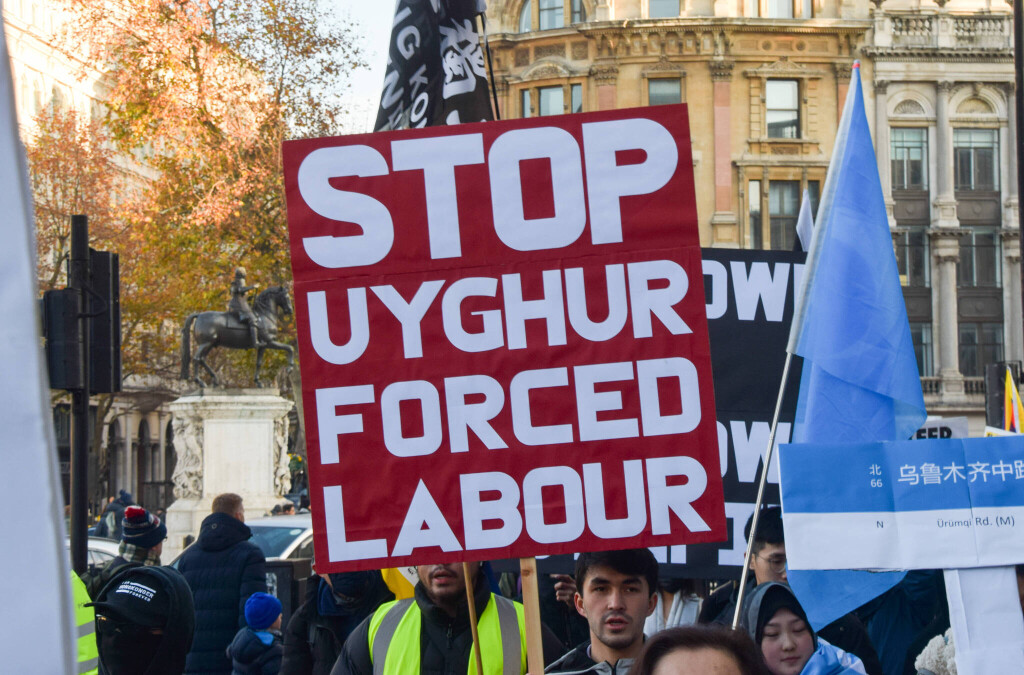
Turkistan Times, 3 June 2026 — The United States has unveiled a groundbreaking trade proposal that threatens to levy an additional 12.5% tariff on imports from Japan due to the nation's allegedly inadequate mechanisms to prevent the entry of goods produced through forced labor. This unprecedented move underscores Washington’s aggressive expansion of its global supply chain scrutiny, shifting traditional trade friction with a vital ally from historic market-access disputes to severe human rights compliance.
According to a report published by News On Japan on June 03, 2026, the Office of the United States Trade Representative (USTR) announced on June 2nd that it is actively reviewing these trade penalties. The U.S. agency contends that Japan imported substantial quantities of Chinese cotton products between 2016 and 2019 which were heavily linked to the region officially cited in the report as "China's Xinjiang Uyghur Autonomous Region." For Washington, this area represents the occupied Uyghur homeland, traditionally known as East Turkistan, where systemic human rights violations have triggered intense international outrage. The proposed penalties mark a dramatic escalation in how the United States intends to leverage its economic power, signaling that even its closest geopolitical partners will face severe consequences if their regulatory frameworks fail to match the strict standards established by American authorities.
At the absolute center of this developing diplomatic and economic dispute is the United States' unyielding enforcement of the Uyghur Forced Labor Prevention Act (UFLPA). Since taking effect in 2022, the UFLPA has completely transformed global trade dynamics by establishing a strict legal presumption that any products connected to East Turkistan are manufactured through forced labor. Under this robust framework, the burden of proof shifts entirely to the commercial importers, who must provide clear and undeniable evidence that their supply chains are completely untainted before their shipments can enter the American market. The UFLPA has allowed U.S. customs authorities to aggressively intercept, detain, or outright block thousands of shipments over the last few years. While initial enforcement heavily targeted textiles and cotton clothing originating from the Uyghur homeland, the scope of the UFLPA has rapidly expanded to encompass modern electronics components, solar panels, and various alternative manufactured goods.
The USTR’s current focus on Japanese imports from the 2016–2019 period highlights a strategic retroactive scrutiny. While global awareness regarding the exploitation of the minority population in East Turkistan was just beginning to consolidate during those years, Washington now argues that Tokyo’s subsequent preventative measures have fundamentally fallen short of international expectations. In stark contrast to the aggressive, legally binding nature of the American UFLPA system, Japan has historically favored a significantly less confrontational approach to supply chain management. The Japanese government has primarily relied on corporate transparency guidance, voluntary due diligence, and non-binding ethical compliance measures for its domestic manufacturers. Consequently, Tokyo has refrained from implementing an all-encompassing, mandatory import ban on goods coming out of the Uyghur homeland.
The geopolitical ripple effect of this strategy extends far beyond Tokyo, as Washington implements a massive, coordinated trade offensive. A report published by The Guardian on June 03, 2026, reveals that President Donald Trump has threatened to levy 10% to 12.5% tariffs on 60 trading partners—including the UK, the EU, Canada, Taiwan, and Australia—citing similar forced labor compliance failures under Section 301 of the Trade Act of 1974. According to U.S. Trade Representative Jamieson Greer, these measures aim to level the playing field for American workers. However, international trade experts view this human rights-centered enforcement as a tactical political maneuver. After the U.S. Supreme Court and trade courts repeatedly struck down Trump's previous protectionist and "liberation day" tariffs as unlawful, this newly weaponized forced labor rationale allows the administration to legally skirt domestic judicial restrictions while imposing sweeping global tariffs.
However, this aggressive economic pressure on allies comes amid growing domestic and international concern over Washington's own diplomatic consistency. Analysts point out that over the last few years, high-level bilateral meetings between U.S. and Chinese officials have seen a noticeable and worrying decline in the prioritization of human rights and the Uyghur crisis. This tapering of rhetoric has sparked deep anxiety among rights advocates, especially given that the United States officially designated Beijing's actions in East Turkistan as a "genocide" back in 2021. The apparent cooling of political discourse at the highest diplomatic levels contrasts sharply with the fierce trade penalties now being proposed against third-party allies.
This policy divergence has now created a critical vulnerability for Japanese businesses, as Washington increasingly views lax regulatory environments as indirect entry points for tainted goods to seep into the wider global marketplace. Because East Turkistan stands as one of the most dominant cotton-producing territories on earth—supplying nearly twenty percent of the global output—its raw materials are deeply embedded in convoluted international manufacturing webs. By targeting Japan, the United States is demonstrating that its anti-forced labor campaign is no longer contained merely to direct trade with Beijing. If these proposed tariffs are officially enacted, they will serve as a historic test case, proving that the United States is fully prepared to reshape global trade policy by tying market access directly to human rights standards and corporate accountability, forever altering the traditional boundaries of economic alliances.