Okuhara Shinpei
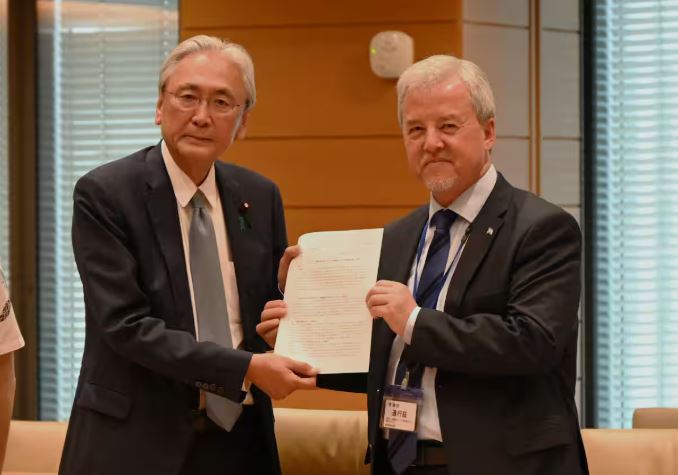
Turghunjan Alawudun, President of the Germany-based World Uyghur Congress, visited Japan and attended the plenary session of the cross-party "Japan Parliamentary Uyghur Friendship Group" on June 2nd. He handed a petition demanding Japan take diplomatic measures regarding the Uyghur human rights issue to the group's chairman, Keiji Furuya (member of the Liberal Democratic Party).
This petition puts forward the following three demands to Japan:
- Demand the Chinese government accept an international investigation into the human rights issue in East Turkistan;
- Promptly pass Japan's "Uyghur Forced Labor Prevention Act," which in principle bans the import of goods from East Turkistan;
- Prevent "transnational repression" acts such as threats by Chinese authorities against Uyghurs in Japan, and strengthen their security measures.
Mr. Furuya: "We must counter with a firm attitude"
The petition also expressed gratitude to Prime Minister Sanae Takaichi for raising the Uyghur human rights issue during a private meeting with Chinese President Xi Jinping at the APEC summit held in South Korea in October last year.
When Japanese politicians hold seminars related to the Uyghur human rights issue, it is common for Chinese authorities to give threatening hints or send warning messages in response.
In his speech before receiving the petition, Keiji Furuya, chairman of the Japan Parliamentary Uyghur Friendship Group, said regarding these kinds of obstacles: "It is extremely important to counter them with a resolute attitude," and mentioned, "The United States has also passed a new law (regarding the Uyghur human rights issue). We need to discuss what more we can do in this regard."
"The Uyghur Genocide has not ended yet"
Rejep Ahmet, President of the Japan Uyghur Association, spoke about the media's attitude toward the Uyghur human rights issue: "News about this has decreased. But this does not mean the Uyghur genocide has ended. Information control has been further strengthened, ensuring the actual situation does not get out, meaning information is deliberately hidden," he said, and mentioned recent UN agency reports focusing on the expansion of forced labor in East Turkistan.
Regarding the Chinese authorities' actions in this regard, he said: "They are trumpeting that there is no problem (regarding Uyghur human rights) through social media (SNS) posts, including many accounts opened under fake names. However, many Uyghurs in Japan are still unable to meet with their families, and many famous cultural figures, including intellectuals who studied at Japanese universities, remain missing."
It is reported that a Uyghur woman living in Japan, after learning that her father and some relatives had been locked up in a camp in East Turkistan, returned to China in June 2019, ignoring the advice of those around her. It was later confirmed that she was arrested by authorities and died at the end of 2020 at the age of 30.
Speaking about the death of this woman, Rejep Ahmet said: "The Chinese authorities have given no explanation; they are taking an attitude as if such a thing never happened. Turning a blind eye to such inhuman acts will embolden the authoritarian leaders who are pursuing terrorist policies, and it will also bring a threat to the democracy of the region, including Japan," adding, "It is a great hope for the Uyghurs that Japan, which advocates human rights diplomacy, speaks up and promotes international efforts."
Translator from Japanese: Turkistan Times, read the Japanese news here.