Turkistan Times, June 4, Istanbul: According to a report titled "Shen Rongqin's International Perspective: Five Years After the Genocide, How are the Uyghurs Doing Now?" published on the "Freedom Evaluation Network" on June 4, 2026, the current situation of the Uyghurs remains deeply alarming, despite continuous condemnation from the UN and Western countries and various sanctions imposed on the Chinese government for its genocidal actions in East Turkistan over recent years.
A new investigation by the "Financial Times" reveals that the Chinese government has updated and developed its methods of countering the Uyghurs in a more systematic manner. Beijing has closed the "re-education camps" that previously drew fierce international criticism, replacing them with more sophisticated and subtle tactics of cultural genocide.
The Massive Prison System Replacing the Camps
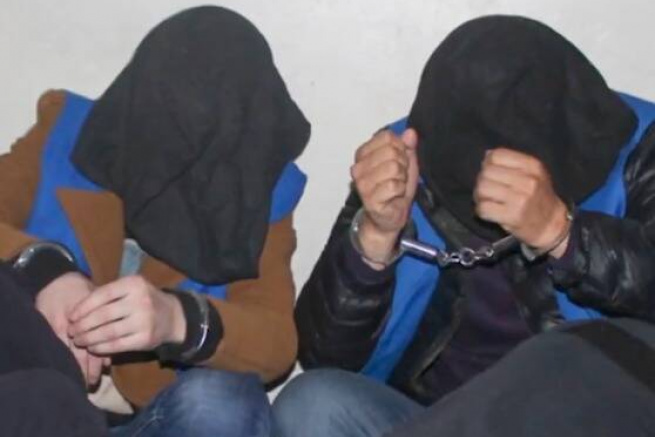
According to the source, although the old camps have been closed, they have been replaced by a vast, high-security system of prisons and detention centers. Based on population density, East Turkistan currently holds the largest network of detention facilities in the world, with at least hundreds of thousands of Uyghurs still confined to prisons or detention camps.
Chinese police retain the power to arbitrarily detain Uyghurs without any court rulings or judicial procedures. Intellectuals, religious figures, and ordinary citizens face high-pressure political indoctrination, cultural eradication, physical torture, and psychological distress in these large-scale facilities. The Uyghur language, culture, and faith are entirely banned, and the brainwashing process continues uninterrupted until the Chinese government deems that they have "completely submitted to the Chinese Communist Party and accepted Xi Jinping's leadership."
High-Tech Surveillance and Religious Restrictions Outside the Camps
Even outside the camps, terror and surveillance permeate every corner of life. Facial recognition cameras and DNA sampling devices cover all streets, and spyware is openly installed on mobile phones to monitor every movement in the outside world. Furthermore, many Chinese cadres have been deployed to live inside Uyghur homes and neighborhoods, monitoring people's private lives directly from within.
The religious freedom of Uyghurs has been completely decimated; at least 65 percent of mosques and sacred shrines in the region (approximately over 16,000 mosques) have been demolished, destroyed, or stripped of their Islamic architectural features and converted into other forms. Hundreds of surveillance cameras are installed inside and outside the surviving mosques, making proximity to them a source of intense fear, which forces people to gradually distance themselves from the religious community. Many citizens have been uprooted from their traditional community life and funneled into state-organized forced labor programs, being sent to factories across China, effectively severing their ties with society.
Family Separation and Epistemic Genocide
On the other hand, cultural eradication tactics begin within Uyghur families. Children are forced into state-run, Mandarin-only boarding schools and orphanages. Forbidden from speaking their mother tongue, many children are now unable to speak fluently with their parents and grandparents in their native language. The Uyghur language has been entirely excluded from schools and social life. Concurrently, the Chinese government is investing heavily in the region's infrastructure, expanding transportation lines, and extracting energy resources.
As a manifestation of cultural genocide at the epistemic level, hundreds of written books in the Uyghur language are being confiscated from homes, libraries, and university bookshelves, seeking to eliminate Uyghur culture from its very intellectual foundations.
Masked Tourism Propaganda and a Warning to Taiwan
Contrary to what many might expect, the Chinese government does not wish to keep East Turkistan sealed off; rather, it promotes travel to the region for millions of domestic Chinese tourists. At the same time, foreign and domestic social media influencers (YouTubers) are invited to tour East Turkistan, flooding social media platforms with propaganda videos echoing the Chinese government's narrative of "security and beautiful scenery" in the region. As long as tourists observe within the boundaries permitted by the Chinese government, Beijing provides them with all forms of assistance.
The author of the article, Shen Rongqin, an Associate Professor at York University in Canada, concluded by noting that Chinese officials have emphasized that after seizing Taiwan, they will inevitably replicate a governance model in Taiwan similar to that of East Turkistan. He warned that the Taiwanese people must clearly understand what China's model of governance in East Turkistan truly entails, and must fundamentally recognize the truth that "a peace brought by humiliation is never peace."