Uyghur Research Institute
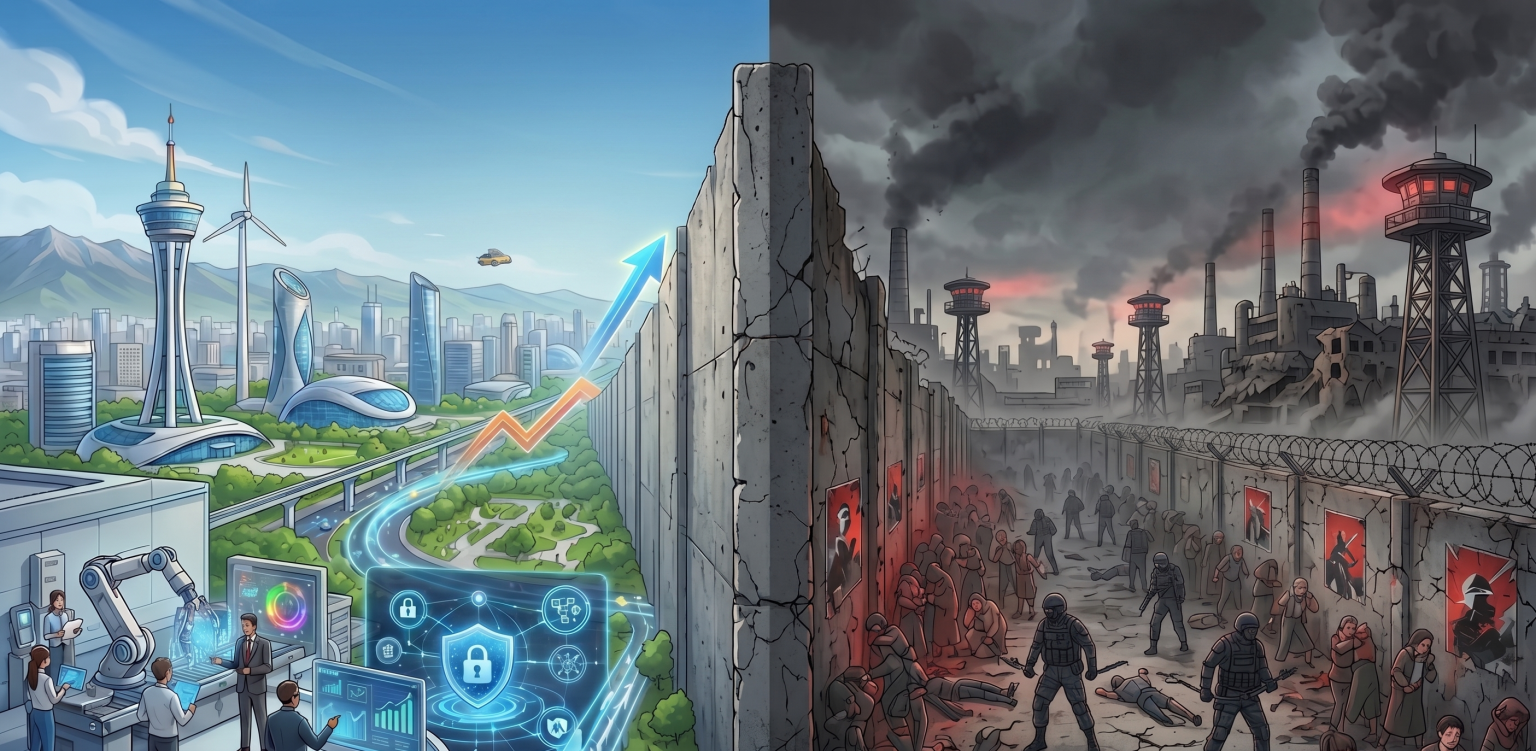
In the June 5, 2026 issue of the Xinjiang Daily, the official organ newspaper of the Chinese government in East Turkistan, a decree titled "Several Measures to Promote the Steady and Positive Improvement of the Economy" (关于推动经济稳中向好的若干措施) was published. This decree promotes economic policies such as developing agriculture, expanding new energy and polysilicon industries, as well as so-called "poverty alleviation" and labor transfer employment in East Turkistan[1]. While the points raised in the decree superficially appear to be positive measures aimed at the economic prosperity of a region, in essence, they are nothing more than a political sophistry concocted to conceal the Chinese state's systematic genocide, racial assimilation, and settler colonialism against the Uyghurs and other Turkic peoples in East Turkistan[2]. Over the years, scholarly and field investigation reports by numerous independent international researchers and organizations—such as Human Rights Watch[2], Amnesty International[3], and the Office of the UN High Commissioner for Human Rights[4]—have exposed with powerful evidence the crimes against humanity hidden behind these types of Chinese "economic development" policies.
In this article, relying on the reports of international academic institutions and independent researchers, we will systematically analyze the key policies proposed in the aforementioned decree one by one, examining the bloody tracks of the Chinese government's so-called system of development and revitalization over the past decade.
The Background of the "Poverty Alleviation" Deception and the Forced Labor System
The relevant articles of this Chinese decree emphasize increasing farmers' income through "surplus labor transfer employment" and "poverty alleviation" policies. Although this looks like an economic assistance plan on the surface, the testimony submitted to the US Congress and the academic research of independent researcher Adrian Zenz have proved that this is a widespread and coercive state-imposed forced labor system[5]. According to reports published by Adrian Zenz, based directly on confidential documents of the Chinese government, this policy implemented by China in East Turkistan is the largest state-organized forced labor system in the world[5].
In a report titled "In Broad Daylight: Uyghur Forced Labour and Global Solar Supply Chains," published by Laura Murphy, a supply chain researcher at Sheffield Hallam University in the UK, and researcher Nyrola Elimä, it is pointed out that the core of these so-called poverty alleviation policies is the forced control and absolute forced obedience of the local people[6]. The researchers revealed in their report that the local Chinese government and enterprises work together to manage workers under a militarized system, forcibly instill the Chinese language and Communist Party ideology, and strictly forbid workers from leaving the factories on their own[6].
China has currently established an "unemployment monitoring and early warning system," through which the income and workplaces of the local people are monitored day and night. If anyone refuses the factory labor arranged by the state, they are immediately detained as a political suspect[5]. Therefore, the "employment" mentioned in the decree is by no means an absolute voluntary market economy, but rather the institutionalization of a new type of slavery based on racial discrimination and oppression by the Chinese state.
The Bloody Cost of "Green Energy": Polysilicon and Terror Capitalism
The decree emphasizes accelerating new energy industries such as green mining, coal extraction, and polysilicon production in East Turkistan[1]. Although China paints this as "green development," a large portion of the global solar energy market is actually a monopoly built on the blood and sweat of Uyghur forced labor[6]. The report by researchers at Sheffield Hallam University stated that a quite large portion of the polysilicon required to manufacture global solar panels is produced specifically in East Turkistan, and the vast majority of it traces back to forced labor[6].
Well-known companies in this sector, such as Daqo New Energy Company, Hoshine Silicon Company, and Xinjiang TBEA, are all enterprises that actively responded to the Chinese government's "surplus labor transfer employment" plan and received massive financial subsidies from the state[6]. These companies utilize Uyghur workers in factories under a militarized training system and have established political oppression.
This phenomenon can be termed "terror capitalism," as summarized by Professor Darren Byler, a well-known anthropologist at the University of Colorado, in his book[7]. Under the pretext of combating terrorism, the Chinese government views an entire nation as a criminal group, places their lives under high-tech surveillance, and simultaneously transforms the bodies of these people into cheap resources to generate value for state capitalism[7]. The real purpose behind the plan to "transfer high-tech industries to Xinjiang" mentioned in this decree is precisely to exploit this cheap resource of slave labor and maintain its monopoly in the global supply chain[1, 5, 7].
Population Optimization: Erasure of National Identity and Democide
Many clauses in the decree promise to "raise the living standards of the local people." However, confidential Chinese documents reveal that a serious "population optimization" plan is hidden behind this[8]. According to the research of Adrian Zenz, the Chinese government's population policy in southern East Turkistan is specifically aimed at changing the situation where Uyghurs hold an absolute majority, artificially increasing the proportion of Chinese Han migrants, and strictly restricting Uyghur births[8].
In this process, as a result of forced birth control policies and social surveillance targeted at Uyghur women, the population growth rate of Uyghurs has drastically declined[8]. A comprehensive report prepared by the Yale MacMillan Center and human rights lawyer Rayhan Asat shows that China's systematic punitive campaign against the Uyghurs has taken on the character of destroying an entire nation, with data proving that the total prison sentences of just a portion of those arrested amounts to "4.4 million years"[9]. This means that the economic construction promoted in the Chinese decree is not for the development of the local Uyghurs, but is a colonial economic system established for Chinese migrants.
Assimilationist Education and the Cultural Destruction Campaign
The decree mentions policies for employing university graduates and supporting education[1]. In reality, the education system in East Turkistan has long become the most horrific assimilation base, serving as a tool for Sinicization to separate Uyghur youth from their identity and families[10]. According to the research of researcher Timothy Grose, the Chinese government has for many years, through "Xinjiang Classes" and boarding schools, separated tens of thousands of Uyghur and other local youth from their families, subjecting them to education that forces Chinese culture upon them[10].
At the same time, a report by researcher Rian Thum points out that following the mass detentions, hundreds of thousands of Uyghur children whose parents were thrown into camps and prisons were forcibly taken by the government and placed in state-run closed boarding schools[11].
Apart from education, the religious and cultural spaces of Uyghurs in society have also been destroyed. Field and satellite research revealed by Dr. Jo Smith Finley, a researcher at Newcastle University, and Rachel Harris, a researcher at the London School of Oriental and African Studies (SOAS), shows that a large portion of the mosques and ancient shrines (mazars) in East Turkistan have been demolished or damaged, and daily religious and cultural activities have been systematically criminalized[12]. The so-called education and employment policies in the article are precisely part of this crime of national assimilation.
The International Economic System and the Crime of Audit-Washing
The decree also specifically emphasizes the development of foreign trade and cross-border trade cooperation[1]. However, forced labor and oppression in East Turkistan have reached a level incompatible with international trade laws, and the continued trading of foreign companies in this region within international markets is generating severe moral and legal responsibilities[5].
Some multinational corporations, eyeing profits in the Chinese market, have attempted to exonerate themselves by undergoing so-called "independent audits" to prove they have no connection to forced labor in East Turkistan[5]. As pointed out in Adrian Zenz's testimony before the US Congress, famous German companies such as the automotive company Volkswagen and the chemical company BASF have engaged in such "audit-washing" practices, whereas in reality, it is completely impossible to conduct any genuine and independent investigation under the authoritarian surveillance environment in East Turkistan[13]. Trading with China in East Turkistan under the guise of "mutual benefit" in the Chinese decree is, in fact, complicity in crimes against humanity and genocide.
Conclusion
In conclusion, this Chinese article is merely a political propaganda tool designed to hide the human rights crisis in East Turkistan from the international community[1]. We see that all the so-called poverty alleviation, industrial revitalization, and education policies outlined within it are uniformly utilized as tools to separate Uyghurs from their land and subject them to genocide and forced labor[1, 9, 12].
The eyes of the international community cannot be blinded by the mask of economic prosperity. Terror capitalism is not green development; it is a massive stain upon human dignity[7]. The international community and businesses must not be deceived by this kind of deception, and must hold China accountable for the state terror and crimes of genocide it is committing.
References:
1 Unknown, "关于推动经济稳中向好的若干措施" (Several Measures to Promote the Steady and Positive Improvement of the Economy), Xinjiang Daily, June 5, 2026.
2 Human Rights Watch, "China: Crimes Against Humanity in Xinjiang", Human Rights Watch, April 19, 2021.
3 Amnesty International, "Report: China's mass internment, torture, and persecution of Muslims", Amnesty International, February 7, 2020.
4 Wikipedia Contributors, "UN Human Rights Office report on Xinjiang", Wikipedia, October 8, 2025.
5 Adrian Zenz, "State-Imposed Forced Labor in the Xinjiang Uyghur Autonomous Region: Current State, Latest Evidence, Impossibility of Credible Social Audits, and Ongoing Western Complicity and Audit-Washing", Congressional-Executive Commission on China (CECC), April 30, 2024.
6 Laura T. Murphy and Nyrola Elimä, "In Broad Daylight: Uyghur Forced Labour and Global Solar Supply Chains", Helena Kennedy Centre for International Justice at Sheffield Hallam University, May 2021.
7 Darren Byler, "Terror Capitalism: Uyghur Dispossession and Masculinity in a Chinese City", PoLAR: Political and Legal Anthropology Review, January 27, 2023.
8 Adrian Zenz, "The Chinese Communist Party (CCP)'s Policies in Xinjiang: Overall Strategy, Central Government Involvement, and Evidence for a Systematic Attack on a Civilian Population as well as Genocide", United States House Select Committee on the CCP, March 22, 2023.
9 Rayhan Asat and Min Kim, "UYGHUR RACE AS THE ENEMY: China’s Legalized Authoritarian Oppression & Mass Imprisonment", Yale MacMillan Center, 2024.
10 Timothy Grose, "Negotiating Inseparability in China: The Xinjiang Class and the Dynamics of Uyghur Identity", The Journal of Asian Studies / Cambridge Core, October 5, 2020.
11 Rian Thum, "Eight Years On, China's Repression of the Uyghurs Remains Dire", United States Holocaust Memorial Museum, February 2025.
12 David Tobin, Laura Murphy, Rian Thum, Rachel Harris, and Jo Smith Finley, "State Violence in Xinjiang: A Comprehensive Assessment", Helena Kennedy Centre for International Justice at Sheffield Hallam University, June 2021.
13 Adrian Zenz, "State-Imposed Forced Labor in the Xinjiang Uyghur Autonomous Region: Current State, Latest Evidence, Impossibility of Credible Social Audits, and Ongoing Western Complicity and Audit-Washing", Congressional-Executive Commission on China (CECC), April 30, 2024.