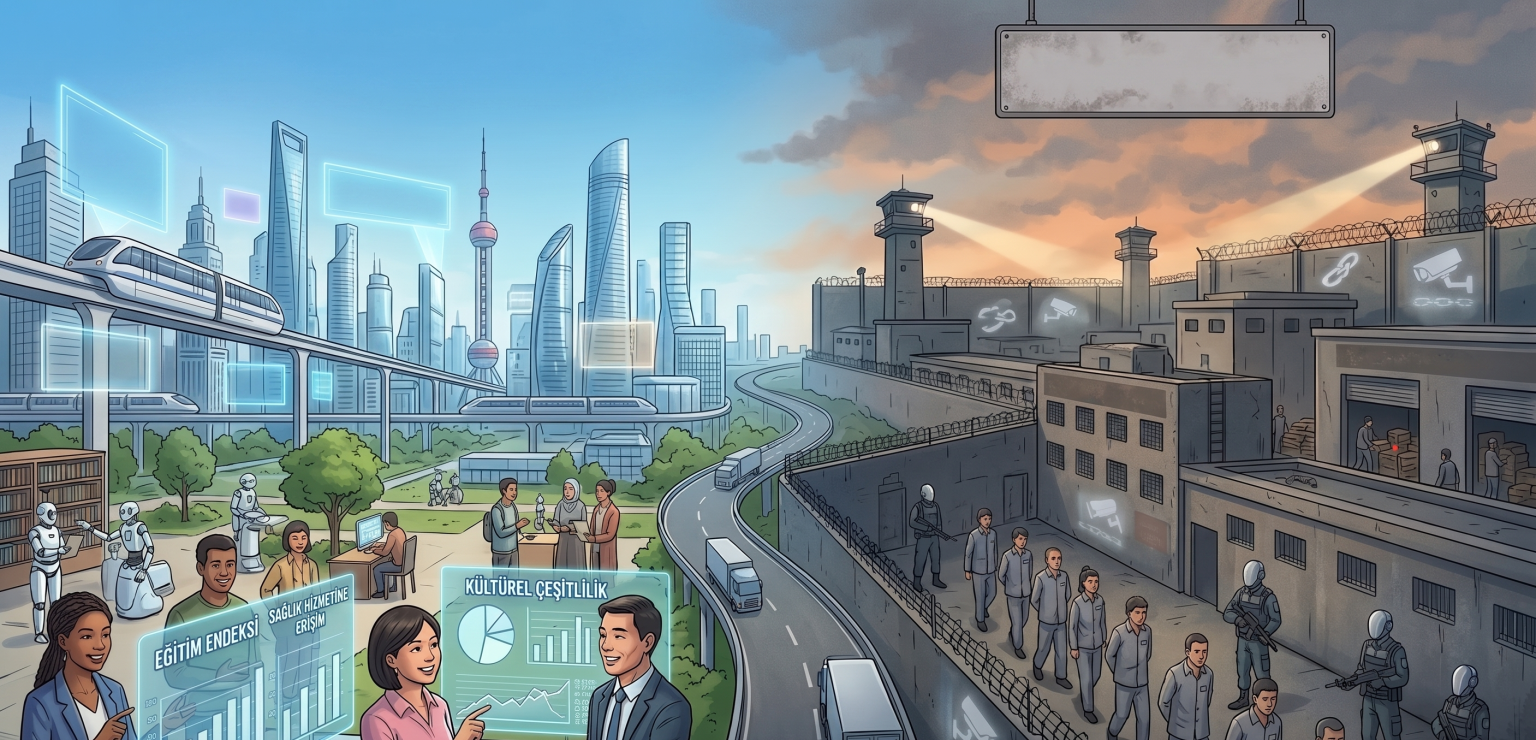
The State Council Information Office of the People's Republic of China officially announced the "National Human Rights Action Plan (2026–2030)" on June 11, 2026[1]. This document is considered the core political program determining what kinds of steps the Chinese government will take in the field of human rights and which goals it aims to achieve over the next five years[1]. The plan puts forward many glowing promises such as economic development, the protection of citizens' political and social rights, the consolidation of ethnic unity, and active participation in the international human rights system[1].
Although the Chinese government propagates this document to the world as proof of its massive development in the field of human rights, for international independent researchers and human rights organizations, it is nothing more than a political mask[2, 3]. The Beijing administration attempts to conceal its crimes under the fake slogan of "promoting human rights through development," but the realities experienced in East Turkistan powerfully expose this lie[4, 5].
The Office of the United Nations (UN) High Commissioner for Human Rights, in its assessment report on East Turkistan released in August 2022, stated that China's brutal practices in the region carry a high probability of constituting "crimes against humanity"[4, 5]. This report internationally certified that the Chinese government inflicts systematic oppression on the Uyghurs and other Turkic peoples under the guise of "combating terrorism and extremism"[4].
However, in the newly published 2026–2030 Action Plan, the Chinese state has not addressed these international criticisms in the slightest; on the contrary, at a time when the genocide in East Turkistan has reached its peak, it has tried to portray itself as the "guardian of global human rights governance"[1]. As stated in Amnesty International’s 2025 declaration, despite three years having passed since the UN report, there has been no positive change in China's repressive policies, and the international community has remained inadequate in holding China accountable[2].
China's published 'Human Rights Action Plan' proves that the Beijing administration views human rights not as a universal value, but as a tool subordinate to the state's national interests and conjectural conditions. While universal law adopts the principle of the indivisibility of civil and political rights and is based on protecting the individual against the state, China imposes an authoritarian model that declares the 'right to life and development' as the most fundamental human right, sacrificing individual freedoms to economic goals. The Chinese government rejects the international community's justified criticisms of the violations in East Turkistan under the guise of the 'politicization of human rights'; it attempts to tailor universal human rights principles entirely to its own political ideology by masking the concentration camps and forced labor policies in the region with concepts such as 'counter-terrorism' and 'poverty alleviation.'
In this article, the articles in China’s aforementioned new "National Human Rights Action Plan" and the real human rights situation in East Turkistan will be compared one by one. In this way, the nature of the assimilation, concentration camps, forced labor, and demographic genocide inflicted by China upon an entire nation—by radically violating international law and human morality—will be put on the table.
Chapter One: Economic Rights and the Crime of Forced Labor Under the Mask of "Combating Poverty"
In the section of the action plan on protecting economic rights, the "right to an adequate standard of living" is specifically mentioned, and it is emphasized that the elimination of poverty and rural development will be resolutely sustained[1]. In this way, the Chinese government claims to improve the living conditions of the people.
In reality, the so-called "poverty eradication" and "labor transfer" programs implemented by the Chinese government in East Turkistan serve a highly insidious purpose. This is a state plan aimed at tearing Uyghur and other Turkic peoples away from their homelands and families, forcibly transferring them to China's internal provinces or closed factories[3, 6].
The action plan gives promises regarding protecting citizens' "right to work," providing regular employment, and perfecting the vocational skill training system[1]. However, as proven by the annual reports consistently published by Human Rights Watch (HRW), millions of people in East Turkistan are punished in these so-called "vocational skill training centers" and subsequently subjected to forced labor[3, 6, 7]. These places are fundamentally not normal schools, but concentration camps surrounded by high-level security systems[4, 5].
In the plan, the Chinese state emphasizes "protecting the rights and interests of laborers," paying wages on time, and ending all forms of discrimination in working life, including gender discrimination[1]. Yet, for Uyghur workers in East Turkistan, such legal protections are absolutely non-existent. They are forced to work in cotton fields, textile factories, and polysilicon (solar panel) production facilities for extremely low wages, under the direct supervision of armed police[3, 6].
Reports by Human Rights Watch have disclosed that even global automotive brands face the risk of being implicated in Uyghur forced labor within their aluminum supply chains[6]. Forced labor has deeply penetrated the electronics, clothing, seafood, and critical minerals sectors, becoming a primary strength of China in the international trade market[3, 6]. Thanks to the US government's enforcement of the "Uyghur Forced Labor Prevention Act" (UFLPA), products worth hundreds of millions of dollars were blocked from entry at customs in 2024 alone[6].
China's action plan mentions property rights, declaring that farmers' lands and properties will not be illegally confiscated, and full compensation will be paid in case of confiscation[1]. However, the policies termed "common development" or "rural revitalization" in East Turkistan have become a vehicle for demolishing Uyghurs' ancient neighborhoods, confiscating their lands, and distributing them to Chinese migrants. After hundreds of thousands of Uyghurs were imprisoned in camps, their properties were frozen or usurped by the state under groundless pretexts.
Therefore, the Chinese state's claims of economic right guarantees remain a completely repulsive eyewash in the face of the systematic ecological and economic plunders in East Turkistan. Ending poverty is, in reality, ending a nation's economic independence. China’s economic development model has constructed a new form of modern slavery for the Uyghurs.
Chapter Two: Health, Women's Rights, and Systematic Demographic Genocide
In the sections of the human rights action plan concerning the "right to health" and "women's rights," beautiful targets have been set, such as increasing people's average life expectancy to 80 years, protecting maternal and child health, and greatly reducing mortality rates[1]. China has also announced many policies regarding protecting women from physical and mental violence[1]. Nevertheless, these so-called guarantees are used in East Turkistan as a tool for a genocide that darkens the nation's future[4, 5].
As clearly demonstrated in the UN High Commissioner for Human Rights' report, a massive decline in birth rates has been experienced in East Turkistan in recent years[4]. In the period between 2015 and 2018, birth rates decreased by more than 60% in areas heavily populated by Uyghurs, such as Hotan and Kashgar[4]. Even more terrifyingly, birth rates across East Turkistan dropped by 24% in 2019 alone, showing an extraordinarily vast chasm when compared to the 4.2% decline rate nationwide[4].
This demographic crisis did not arise through natural means; on the contrary, it has been a direct consequence of the state's compulsory birth control policies[4]. The Chinese government ruthlessly executes forced insertion of birth control devices/pills and mandatory abortion operations on Uyghur women[4, 5]. In addition, Uyghur women in the camps have been subjected to systematic sexual assaults, and UN experts have characterized the victims' testimonies as "completely credible"[4, 5].
Although the Chinese state claims in its action plan that it will protect women in the workplace, family, and society[1], for East Turkistani women, the state itself has turned into a tyrant. The government, which claims to protect maternal and child health, has forcibly separated hundreds of thousands of children from their mothers and fathers, imprisoning them in state-controlled orphanages and boarding schools, entirely depriving them of family affection and national identity[3, 4]. These inhumane practices clearly prove that the so-called action plan is nothing but a fake mask.
These systematic actions completely coincide with the articles "imposing measures intended to prevent births within the group" and "forcibly transferring children of the group to another group" in the UN Convention on the Prevention and Punishment of the Crime of Genocide[4]. China's so-called women's and health rights declarations, when considering the genocide targeting the people of East Turkistan, show that they are nothing but cheap words on paper.
Chapter Three: Education, Culture, and the Strike of National Assimilation
In the sections of the plan belonging to education and culture, China launches itself as the protector of "ethnic equality," claiming that it respects minority groups' rights to protect and develop their own languages and cultures[1]. The plan also mentions that justice will be promoted in the national education system[1]. However, education and culture policies in East Turkistan serve not to teach a nation knowledge and wisdom, but on the contrary, to Sinicize them and subject them to national assimilation[3, 6].
Based on the political line called "Strengthening the Common Consciousness of the Chinese Nation," the Chinese state officially banned education in the Uyghur Turkic language in all schools. Children are deprived of speaking their mother tongue from an early age and are forced into an insidious brainwashing education. National language and writing rights have been completely trampled; Uyghur script has been scraped away and erased from government organs, social areas, and even signs in marketplaces.
In the arena of religious belief, the action plan promises to "guarantee freedom of religious belief"[1]. Yet, China carries out oppression at a level unprecedented in history under the slogan of "Sinicizing Islam" in East Turkistan[6]. According to the records of Human Rights Watch (HRW), religious activities in the region are criminalized by being explicitly associated with terrorism and extremism[3, 6]. Since 2017, tens of thousands of mosques and historical shrines have been demolished or stripped of their original identity.
Uyghur intellectuals, religious scholars, and cultural pioneers have become the primary targets of this assimilation policy[3, 6]. Dr. Rahile Dawut, a world-renowned Uyghur folklore expert and intellectual, was sentenced to life imprisonment on fabricated charges related to state security[6]. Ilham Tohti, the world-famous Uyghur academic and economist, was sentenced to life imprisonment more than ten years ago on allegations of "separatism"[6]. The Chinese government has completely paralyzed East Turkistan’s cultural and educational system, throwing all elites representing the Uyghur identity into dungeons[6].
The statements in China's action plan regarding the protection of cultural heritage and the revitalization of cultural activities are the exact opposite of the realities in East Turkistan[1]. The ancient cultural traces of the Uyghurs have been completely destroyed, and these places are displayed as state-driven, fake touristic carnivals[3]. What China displays here is not a protected culture, but a dead matter caged and turned into a political propaganda apparatus.
Chapter Four: Citizens' Political Rights, Fair Trial, and State Terrorism
In the section addressing citizens' political rights, the action plan makes fake promises about democratic participation, government oversight, and freedom of expression[1]. Along with this, touching upon the "right to a fair trial," it advocates for the prohibition of torture, the protection of the right to legal counsel, and the implementation of the presumption of innocence[1]. However, not only in East Turkistan but across China, the treatment directed at political dissidents and the legal system has completely taken on the character of state terrorism.
As stated in the monitoring report on the political and judicial system published by the Taiwan Foundation for Democracy (TFD), China's judicial system is fundamentally under the ideological control of the Communist Party, making it impossible to speak of independent courts[8]. Courts operate in accordance with the instructions of party committees[8]. In "sensitive" cases concerning state security, the participation of family relatives and independent lawyers in hearings is completely blocked, and detainees are forced to confess to crimes through torture and threats[8].
Such judicial violations have reached even more grave dimensions in East Turkistan. According to data from Al Jazeera and Human Rights Watch, more than 250,000 innocent Uyghurs have been deprived of fair trial processes and sentenced to heavy prison terms since 2016 within the scope of the Chinese government's counter-terrorism operations[6, 7]. More than half a million people have been thrown into dungeons with long-term, groundless sentences, and more than one million people have been detained in camps[6, 7]. These trials have been conducted completely in secret without any lawyers, clearly demonstrating how tragicomic the "fair trial" promises in the action plan are.
On the issue of personal data security, the Chinese state claims in its human rights plan that it will protect cybersecurity and personal privacy[1]. However, East Turkistan has been completely transformed into a high-tech digital prison; Uyghurs are kept under surveillance night and day via artificial intelligence-supported facial recognition systems, extensive camera networks, and spyware installed on phones[3]. Chinese technology companies constructed this system in cooperation with the state, and China’s so-called "data protection" laws are used solely to increase the state’s inspection and control over citizens. No privacy or liberty has been left to citizens in East Turkistan.
Chapter Five: The Game of "Cooperation" with the International Human Rights System and Transnational Repression
In the final section of the action plan, the Beijing administration touches upon "active participation in global human rights governance," cooperation with the UN and international human rights mechanisms, and contributing "Chinese wisdom" to the global human rights cause[1]. This is nothing more than a complete diplomatic eyewash, and China's attitude toward international obligations clearly reveals its insincerity.
When the UN High Commissioner's Office published its special report on East Turkistan in 2022, far from accepting it or fulfilling the recommendations, China rejected the report, calling it "illegal, fabricated, and invalid," and threatened to terminate its cooperation with the UN[6, 9]. China's purpose in participating in the international system is not to improve human rights, but to hide its own crimes at the UN podium, expand its diplomatic veto power, and prevent international scrutiny[9].
Sarah Brooks, Director of the Amnesty International UN Office in London, speaking on the occasion of the third anniversary of the UN report, stated: "The international community’s silence in the face of crimes in Xinjiang is a shame. People’s lives have been ruined, families torn apart"[2]. Figures from the relatives of those imprisoned in the camps, such as Fatma and Medine Nazımı, declared that they have not received any news from their relatives since 2018, and that this type of non-communication is a special torture method of the state[2]. What is happening in East Turkistan is not just an internal matter of a state, but a global humanitarian crisis[2].
Even more terrifying is China's transnational repression power. China, which claims to protect human rights in the world, pursues Uyghur refugees who fled East Turkistan and sought asylum abroad all around the world, threatening them through their families back home to silence them or force them to return[3]. Under China’s economic and political influence, some countries, especially some Muslim countries, have not only turned a blind eye to the oppression in East Turkistan but have come to the point of extraditing Uyghurs on their territory to China[3, 5, 9]. This situation clearly lays bare how miserable a propaganda game China’s claims of international "cooperation" in the field of human rights consist of.
Conclusion
To summarize, China's "National Human Rights Action Plan (2026–2030)" is a fake political document crafted with extreme meticulousness, adorned with words that please the international community and democratic values[1, 2]. This document is a fake mask produced by the Communist Party to make itself up and alter its bad image as a "human rights violator" in the international arena.
The inhumane reality in East Turkistan—concentration camps, forced labor supply chains, demographic genocide conducted through birth control, and the systematic destruction of language and culture—clearly reveals that these fake slogans of the government possess no value whatsoever[3, 4, 6, 7]. No matter how many times China declares a "human rights plan," its image as a criminal state before the world public opinion will absolutely not change as long as the genocide in East Turkistan does not stop.
The world public opinion, the United Nations, and human rights organizations must never be deceived by such false propaganda from China[2]. Implementing the recommendations of the report published by the UN Office of the High Commissioner for Human Rights and immediately holding China accountable for the crimes it has committed is today's most urgent duty[4, 5]. As long as the concentration camps in East Turkistan are not closed and millions of innocent people are not released, any human rights promise from China has no legal or moral validity. The world must turn its face not toward the fake promises in words, but toward the bloody reality, and take concrete steps against tyranny.
Bibliography:
- Xinhua News / The State Council Information Office of the People's Republic of China, "National Human Rights Action Plan of China (2026-2030)", Xinhua Net, June 11, 2026 1-3.
- Amnesty International, "China: Still no accountability for crimes against humanity in Xinjiang, three years after major UN report", Amnesty International, August 28, 2025 4, 5.
- Office of the United Nations High Commissioner for Human Rights (OHCHR), "OHCHR Assessment of human rights concerns in the Xinjiang Uyghur Autonomous Region, People's Republic of China", United Nations / Wikipedia, August 31, 2022 6, 7.
- Human Rights Watch, "World Report 2026: China", Human Rights Watch, 2026 8, 9.
- Human Rights Watch, "World Report 2025: China", Human Rights Watch, 2025 10, 11.
- Al Jazeera, "China rejects growing Western and human rights criticism regarding Uyghur Muslims", Al Jazeera, February 24, 2021 12, 13.
- UN News, "China responsible for 'serious human rights violations' in Xinjiang province: UN human rights report", UN News, August 31, 2022 14, 15.
- Taiwan Foundation for Democracy (TFD), "Observation on Judicial Human Rights: The Ideologization of the Political and Legal System", Taiwan Foundation for Democracy, 2021 16, 17.
- Al Jazeera, "China upset over UN report on 'violations' against Uyghur Muslims in Xinjiang", Al Jazeera, September 9, 2022 18, 19.