By Uyghur Times | July 30, 2026
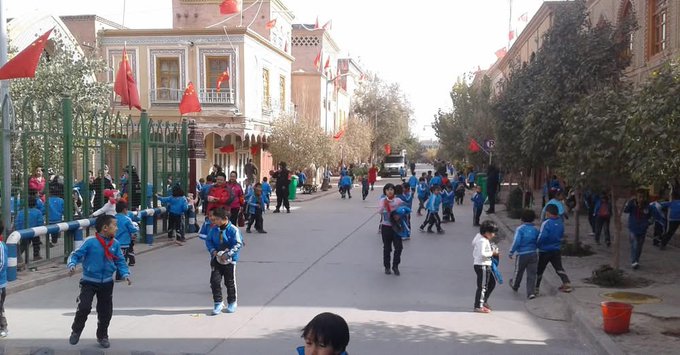
A new analysis published by the Xinjiang Victims Database (Shahit.biz) estimates that at least 143,228 mostly Uyghur children in the four southern prefectures of the Uyghur homeland were separated from one or both parents due to China’s mass detention campaign by late 2018.
The report, published on July 27, is based on extensive documentation from Konasheher (Shufu) County in Kashgar Prefecture, where researchers reconstructed family relationships using leaked Chinese government records and detention data. The study provides one of the most detailed estimates to date of how the mass internment campaign affected Uyghur families and children.
Thousands of Children Left Without Parents in One County
According to the report, researchers identified 21,809 individuals in Konasheher County who had been detained for prolonged periods beginning in 2017. Using household registration records and family relationship data, they documented 3,772 children who were left behind after one or both parents were detained.
The researchers describe this figure as a conservative lower estimate, noting that additional cases may emerge as more documentation becomes available.
The analysis found that families often had multiple children. On average, 2.4 children were affected in each household where parents were detained, while more than 700 families had three or more children separated from their parents.
The report avoids making assumptions about the children’s subsequent living arrangements, noting that while many were reportedly placed in boarding schools or left with relatives, available evidence does not allow researchers to determine the outcome in every case.
Fathers Usually Detained First
The study also documents a recurring detention pattern within affected families.
Researchers found that in the majority of cases, fathers were detained first, often receiving lengthy prison sentences in 2017, while mothers were later sent to internment camps during 2018. This sequence accounted for approximately 56 percent of documented cases in families where detention dates could be clearly established.
The findings illustrate how the detention campaign frequently resulted in the removal of both parents from the household, leaving children without their primary caregivers.
Extrapolating Across Southern Uyghur Homeland
Using the Konasheher data, researchers estimated that 4.22 percent of non-Han minors in the county had one or both parents detained.
Because detention rates documented across Uyghur-majority counties in southern Xinjiang showed similar patterns, the report applies this percentage to the broader non-Han child population in the four southern prefectures—Kashgar, Hotan, Aksu, and Kizilsu.
Based on population figures from the 2019 Xinjiang Statistical Yearbook, the report estimates that at least 143,228 children in these regions had one or both parents detained by late 2018.
Among the counties with the largest estimated numbers of affected children are:
- Yarkand County: approximately 14,100
- Qaraqash County: approximately 10,870
- Qaghiliq County: approximately 8,200
- Kashgar City: approximately 8,068
- Peyziwat County: approximately 7,519
- Hotan County: approximately 6,478
- Hotan City: approximately 6,385
The report limits its estimate to southern Xinjiang, noting that detention policies may have differed in northern parts of the region and that available evidence does not support applying the same methodology province-wide.
Continuing Documentation
The Xinjiang Victims Database, an independent documentation project, has spent years compiling evidence from leaked Chinese government documents, survivor testimonies, and official records to document victims of China’s mass detention campaign targeting Uyghurs and other Turkic peoples.
Researchers emphasize that the estimate of 143,228 children should be understood as a minimum figure, as the documentation remains incomplete and additional records could reveal more affected families.
The findings add to growing evidence that China’s mass detention campaign not only imprisoned large numbers of Uyghurs but also caused widespread family separation, affecting hundreds of thousands of children across southern Uyghur homeland.
Source: Xinjiang Victims Database (Shahit.biz), “An Estimate on the Number of Children Separated from Parents in Southern Xinjiang,” published July 27, 2026.