Introduction
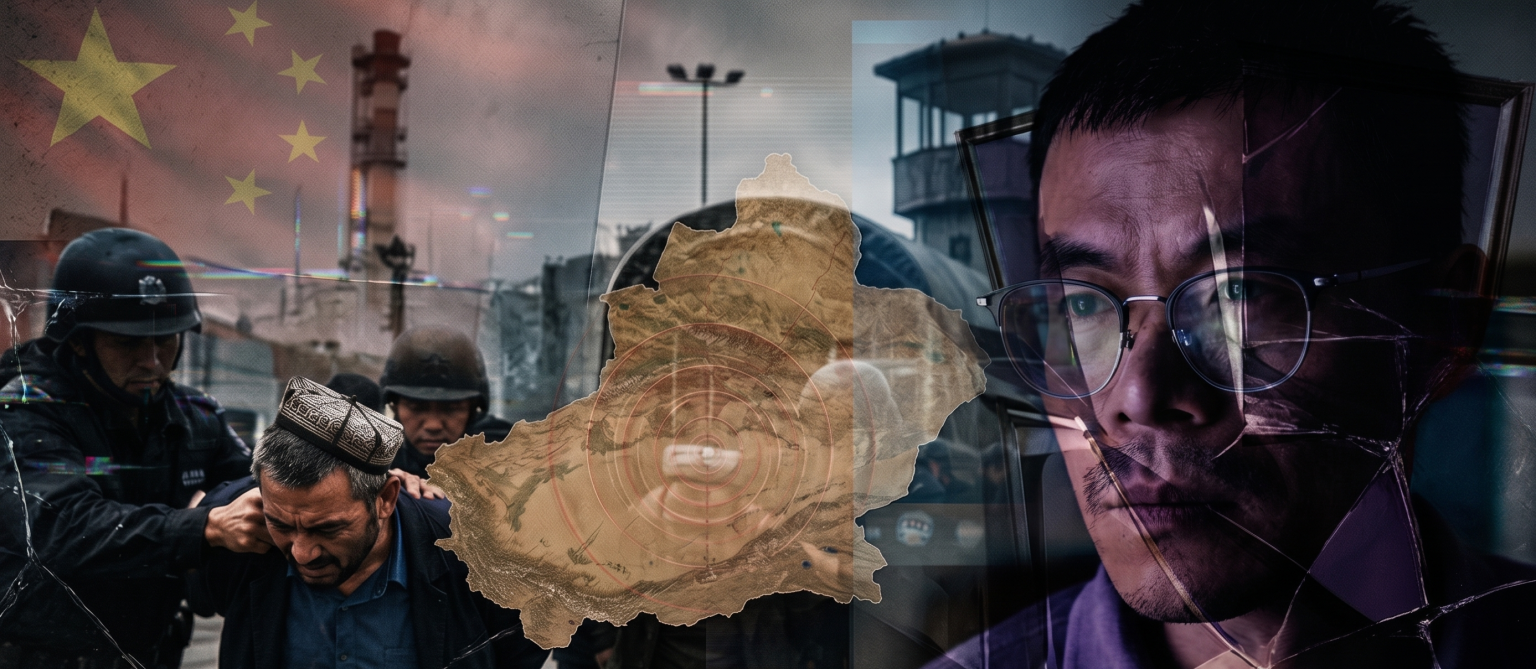
The policies of mass detention, forced labor, cultural assimilation, digital surveillance, and cultural and ethnic genocide implemented by the Chinese Communist Party (CCP) in East Turkistan since 2017 present a critical case for understanding the governance methods of contemporary authoritarian regimes toward populations under their control. While these policies are legitimized in official discourse within the framework of "combating terrorism and religious extremism," independent research, leaked documents, and victim testimonies document a systematic population management and assimilation project. In this context, the testimony of Zhang Yabo, a former Han Chinese officer who served in the East Turkistan police force between 2014 and 2023, stands out as a rare "insider" source.
Through concepts such as the distinction between despotic and infrastructural power, bureaucratic rationality in authoritarian regimes, ideological internalization, and the perpetrator-victim dilemma, this analyzes how the Chinese state manages the Uyghur population and how ordinary individuals are integrated into this apparatus. Sources include Adrian Zenz's Foreign Policy article (April 16, 2026), Li Yuan's New York Times report (July 28, 2026) and its Chinese version, Der Spiegel's investigation (April 16, 2026), and Yuan Li's YouTube interview. The aim is to reveal the micro-level workings of authoritarian governance by linking individual testimony to structural processes.
Authoritarian Power, Bureaucracy, and Complicity
Authoritarian regimes are defined not only by the sheer use of force but also by institutional capacities that penetrate deep into society. Despotic power refers to arbitrary and visible violence, while infrastructural power denotes the state's logistical capacity to govern society through administrative processes. In Zenz's analysis, the mass detention campaign during the Chen Quanguo era (2016–2021) represents the peak of despotic power; whereas, during the Ma Xingrui era (2021–2025), oppression evolved into a more concealed, decentralized, and sustainable infrastructural form (Zenz, 2026).
This evolution also aligns with Hannah Arendt's thesis of the "banality of evil" and Zygmunt Bauman's argument that modern bureaucracy increases moral distance. Ordinary officials join the system driven by career, salary, and hierarchical pressure rather than ideological belief. Zhang's metaphor of a "small screw" (xiao luosiding) perfectly reflects this bureaucratic rationality. While this metaphor blurs individual responsibility, it also reveals how authoritarian ideology turns individuals into "perpetrators." In the Chinese context, the suppression of public accounting for the Great Famine, the Cultural Revolution, and Tiananmen is a structural element that prevents the formation of a consciousness of complicity (Li Yuan, 2026).
Zhang Yabo's Trajectory: Upward Mobility and Integration into the System
Zhang Yabo's life is a typical example of how a poor rural Han Chinese is mobilized in the authoritarian modernization process. Born in Henan in 1986, he grew up in a village that didn't get electricity until he was eight years old. He moved to East Turkistan for university in 2006, worked as a teacher, and then became a guard at a penal camp in Hotan in 2014 for a higher salary. His salary rose from roughly $400 to $650, to $900 after becoming an official police officer in 2016, and to $1,250 in 2023 (Li Yuan, 2026).
This trajectory is the micro-level reflection of the Chinese state's strategy of integrating the Han population into the security apparatus in East Turkistan. Zhang notes that during the night raids in 2017, he was the first to enter Uyghur homes, believing them to be "bad people." He states that he distributed bread and water to prisoners in bus convoys, claiming to be "serving the passengers." He describes his supervision of 3,000 workers in cotton fields in 2018 as a "comfortable break," acknowledging that his main duty was to prevent escapes and prayers (Li Yuan, 2026; Der Spiegel, 2026).
This process is a mechanism where ideology merges with pragmatic interests. Zhang accepted the international criticisms of forced labor as "lies" based on the Chinese Ministry of Foreign Affairs' statements, saying, "I never thought about it." However, when he himself was restricted during the pandemic ("it affected me personally"), he began to feel the oppressive nature of the system. This transition shows that the violence applied to the "other" in authoritarian regimes becomes questionable when it touches the perpetrator's own body.
Mechanisms of Oppression: Penal Camps, Quotas, and Biopolitics
Zhang's 2014–2016 penal camp experiences document his encounter with despotic power in its barest form: hanging from ceilings, beatings, sleep deprivation, sexual violence, and deaths. He recounts that a colleague committed rape during an interrogation and that prisoners died with "alarming frequency." He states that he did not inflict direct violence himself, but heard the screams and saw the broken batons (Der Spiegel, 2026; Zenz, 2026).
In the post-2017 period, infrastructural power came to the forefront. When he was assigned to the village of Yurungqash in 2021, he observed that 40 percent of adults were in penal camps, and some households consisted only of children and grandparents. A weekly "informant" quota, "abnormal" indicators such as an increase in electricity consumption, home visits, and the prohibition of religious practices ensured the total penetration of daily life. In 2023, with quotas for short-term detentions, 15-day arrests under harsh conditions were implemented, citing "violations" such as not attending the flag ceremony or possessing sports equipment (Zenz, 2026).
Forced labor transfers function as a biopolitical tool. According to official figures, 3.4 million transfers took place in 2025. Zhang notes that those who resisted were punished with "thought work" meetings lasting until midnight, mandatory Chinese lessons, and short-term detention. The limitation of the village population to the elderly and children increased unsupervised child deaths. This is a management technology aimed at eradicating ethnic identity while maximizing the population's productivity (Zenz, 2026).
Cultural assimilation is also part of the same logic: the demolition or 24-hour guarding of mosques, the banning of reading the Quran, fasting, and the Uyghur language, "ethnic unity education," and pork-eating tests. Zhang observes that by the time he left in 2023, traditional practices had effectively disappeared (Zenz, 2026; Li Yuan, 2026).
The Perpetrator-Victim Dilemma and Critical Evaluation
Zhang's use of the "iron wall" metaphor in his speech at the German Bundestag, saying it imprisoned both the Uyghurs and the souls of the enforcers, and his bursting into tears stand out as an emotional moment of confession. However, his claim that "my pain was equal to that of the Uyghurs, perhaps even heavier" is problematic from a critical perspective. As Kurban emphasizes, Chinese police officers were not forced to abandon their language and culture; they were not at risk of arbitrary detention, torture, or forced labor. It is true that the system treated its own personnel in a degrading manner (72-hour cold watches, "donkey" comparisons); but this does not change the asymmetrical nature of structural violence (Li Yuan, 2026).
Zhang's "small screw" defense and his shifting of the most severe practices onto Uyghur auxiliary police is a strategy of shifting responsibility upwards and to the "other." While Björn Alpermann and Zenz acknowledge that the testimony provides valuable details showing the "routinization" of oppression after 2017, Li Yuan and Der Spiegel reporters note that he remained vague regarding the most severe abuses. This is a manifestation of the moral blindness that authoritarian ideology creates in individuals: A person who remains within the system for years has difficulty seeing their own role in a structural context (Li Yuan, 2026; Der Spiegel, 2026).
Authoritarian Resilience and Accountability
Zhang Yabo's testimony shows that the Chinese state's East Turkistan policies did not "end" after 2019, but rather evolved into a more sophisticated, concealed, and sustainable form of infrastructural power. The quota system, digital surveillance, forced labor, and cultural erasure constitute a governance model aimed at total control of the population. The integration of ordinary individuals into this apparatus in pursuit of career and security forms the micro-foundation of authoritarian regimes' resilience.
This case offers two important lessons. First, the transition from despotic power to infrastructural power makes oppression less visible but more permanent, complicating international monitoring. Second, the perpetrator-victim dilemma blurs individual responsibility while concealing the ideological and institutional continuity of the system. Zhang's courage lies in his choice to speak out; however, genuine accountability requires structural transformation and collective reckoning rather than individual confessions. Silence, as he also pointed out, continues to be part of the problem.
Zhang's narrative reveals that the penal camps and forced labor system in East Turkistan are not just an "extreme period" left in the past, but have become a permanent control mechanism woven into the fabric of daily life. The gap between the official Chinese narrative of "vocational training centers" and the reality on the ground has become clearer thanks to this testimony. At the same time, how the system consumes its own enforcers adds an additional dimension regarding the human cost of authoritarian rule. Nevertheless, the claim of individual victimhood should not overshadow the scale of ethnicity-based structural violence.
The sustainability of the policies in East Turkistan is related to their reliance on administrative and biopolitical tools rather than visible violence. Therefore, international monitoring and accountability efforts must focus not only on the camp period but also on daily surveillance at the village level, labor transfers, and cultural erasure practices.
Zhang Yabo's experience shows that an ordinary person within an authoritarian apparatus can simultaneously be a perpetrator and an element oppressed by the system. However, this dual position does not eliminate responsibility. The continuity of the system is made possible precisely by the silent functioning of such "small screws." Speaking out is important in breaking this silence; but without structural change, similar trajectories will be reproduced. Analyzing the policies directed at the Uyghur population in East Turkistan, therefore, requires addressing both macro-level power relations and micro-level individual experiences together.
Bibliography:
Li Yuan. (2026, 28 Temmuz). He Helped China Repress Uyghurs. He Says He’s a Victim, Too. The New York Times. (Basılı versiyon: 30 Temmuz 2026, Section A, s. 1). https://www.nytimes.com/2026/07/28/business/china-uyghurs.html Çinçe versiyon: 袁莉. (2026, 28 Temmuz). 参与镇压维吾尔人的前新疆警察:我也是受害者. The New York Times (Çinçe). https://cn.nytimes.com/china/20260728/china-uyghurs/
Zenz, A. (2026, 16 Nisan). Xinjiang’s Repression of Uyghurs Has Evolved, Not Ended. Foreign Policy. https://foreignpolicy.com/2026/04/16/china-xinjiang-uyghur-camps-repression/
Giesen, C., Obermaier, F., Obermayer, B., Stahl, S. & Chen, J. (2026, 16 Nisan). Vor Schloss Neuschwanstein setzte er sich ab, nun enthüllt er Chinas Verbrechen. Der Spiegel, 17/2026. https://www.spiegel.de/ausland/china-polizist-auf-der-flucht-vor-schloss-neuschwanstein-setzte-er-sich-ab-nun-enthuellt-er-pekings-verbrechen-a-99dc7584-e913-4069-a695-56e6261b5d58
Yuan Li. (2026). “我只是一枚小螺丝钉”:一名前新疆警察的自述 (YouTube röportajı). https://www.youtube.com/watch?v=_aAAAT3kYP4
İnternethaber. (2026, 30 Temmuz). Çinli polisten dehşet Uygur itirafı. https://www.internethaber.com/cinli-polisten-dehset-uygur-itirafi-namaz-kilanlara-bakin-ne-yapiyorlarmis-2452930h.htm
Deutsche Welle. (2026). 墙外文摘:前新疆警察继续讲述曾经被囚禁的灵魂. https://www.dw.com/zh/%E5%A2%99%E5%A4%96%E6%96%87%E6%91%98%E5%89%8D%E6%96%B0%E7%96%86%E8%AD%A6%E5%AF%9F%E7%BB%A7%E7%BB%AD%E8%AE%B2%E8%BF%B0%E6%9B%BE%E7%BB%8F%E8%A2%AB%E5%9B%9A%E7%A6%81%E7%9A%84%E7%81%B5%E9%AD%82/a-78207473