Since 2016, the Chinese regime has been conducting a violent campaign of repression in East Turkistan against the Uyghurs, a Turkic-speaking minority group who are often falsely accused of extremism and separatism by Beijing. International observers have characterised the situation as a “genocide” and denounced “crimes against humanity.” According to the latest count by RSF, 78 journalists and press freedom activists are detained in East Turkestan, including Sakharov Prize winner Ilham Tohti. Since 2017, when international scrutiny of the atrocities against Uyghurs increased, media outlets linked to the Chinese state have increasingly portrayed China’s policies as counterterrorism and development measures, while whitewashing its abuses.
Many Uyghurs have fled to Türkiye, where the Uyghur Human Rights Project estimates there is a diaspora of 50,000 people. “Türkiye hosts one of the world's largest Uyghur diaspora communities and has traditionally been viewed as a place of refuge because of cultural and linguistic ties,” Dr. Shewket Nasir, a Uyghur journalist and the former Istanbul bureau chief of Radio Free Asia, told RSF. “While Türkiye has continued to host a large Uyghur community, some journalists and activists say they feel less protected than they did a decade ago, particularly because of uncertainty over immigration status, fears of deportation and the broader political climate.” At the end of 2025, the NGO Human Rights Watch warned that as Türkiye has tightened ties with China, “the country has become less safe for Uyghurs without Turkish citizenship.”
The more China dominates Türkiye’s media space, the harder it is to alert Turkish citizens to the plight of Uyghurs in Türkiye. “As Beijing’s narratives become more present in Turkish-language media, the risk is that critical voices — particularly Uyghur journalists and activists — may find themselves increasingly difficult to be heard,” said Uyghur writer Hamid Gokturk, founder of the Türkiye-based online media UyghurNet. “Not because alternative information does not exist, but because the resources behind competing narratives are highly unequal.”
“In Türkiye, the increasing prominence of Chinese state narratives risks erasing independent reporting on the Uyghur genocide and depriving the public of the ability to hear directly from those affected. The danger is not only that Beijing’s narratives are spreading in Türkiye, but that Uyghur voices are being pushed out of the conversation altogether. When propaganda dominates an information environment, those documenting persecution risk becoming invisible.
CCP narratives in Türkiye’s information space
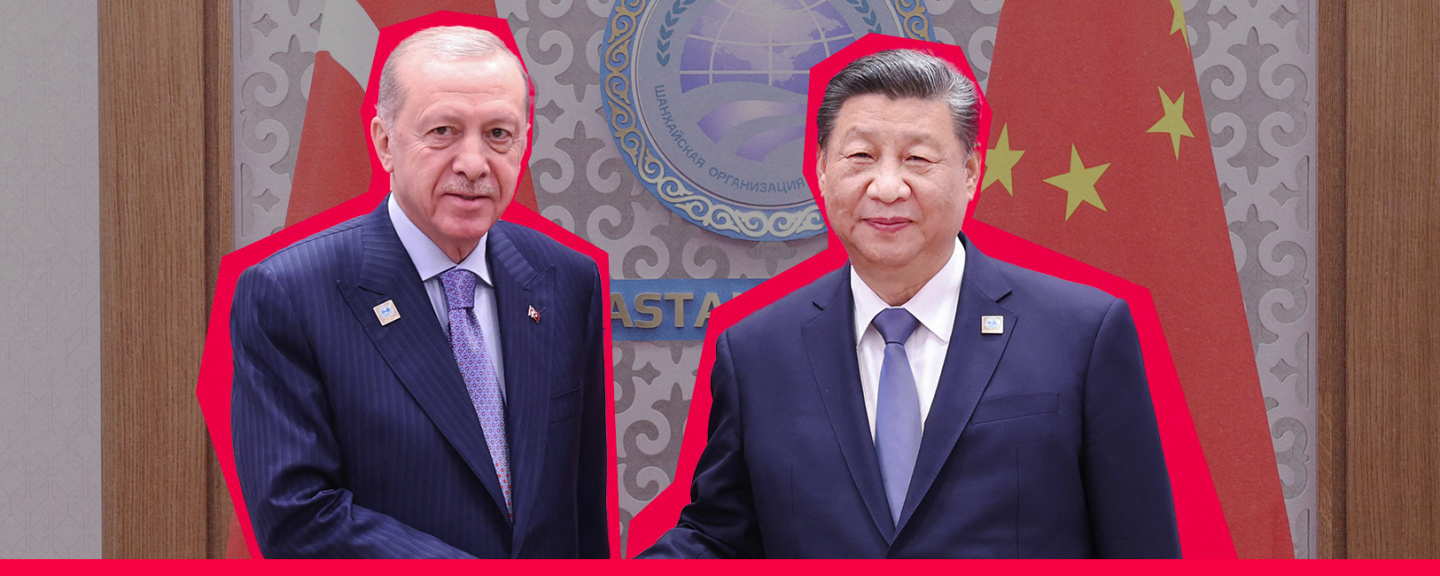
The CCP has steadily expanded its presence in Türkiye’s information space through a combination of international state broadcasters, local partnerships, sponsored content and social media. In 2012, the China International Publishing Group — China's largest state-owned foreign-language communications organisation — signed an agreement with Turkuvaz, a media group aligned with the Turkish president, to publish a Turkish edition of China Today, a magazine showcasing China's economic development, culture and official narratives. In 2016, state broadcaster China Radio International (CRI) launched its Turkish service CRI Türk, which was later restructured as CGTN Türk in 2023.
At the same time, Chinese state outlets such as Xinhua News Agency and CRI developed partnerships and content-sharing agreements to adapt their pro-Beijing content to Turkish audiences. For instance, the media group GB Times, which is fully funded by CRI, opened GB Times Türkiye in 2013, which signed agreements with local radio stations to allocate dedicated timeslots for CRI’s Turkish programmes, and launched the Turkish-language service of CTV (China Television) in 2014. Anadolu Agency, Türkiye’s state-run national news agency, signed a formal cooperation agreement with Xinhua News Agency in 2018. That same year, the Turkish Radio and Television Corporation (TRT), which had been cooperating on content with the state-run television network China Central Television (CCTV) since 2010, entered into similar partnerships with the China Media Group (CMG) and CGTN.
On social media, CGTN Türk (3.8M combined followers on its Turkish-language accounts), Xinhua Türkiye (103M) and the Chinese Embassy in Türkiye (70.8k) all actively post about East Turkestan's economic development as well as assertions that "China respects religious freedom" and that the "vocational education centres in Xinjiang are not detention camps." With 38 million followers across X, Facebook, Instagram, YouTube and TikTok, these accounts also criticise Western media for spreading misinformation about Xinjiang and Uyghurs.
A shrinking space for the Uyghur diaspora
As China’s state media gains more ground, so does propaganda about East Turkestan. CGTN Türk has dismissed criticism of China’s actions in East Turkestan as “baseless allegations” and portrayed its city Kashgar as a vibrant centre of Uyghur culture, sentiments that are amplified by favourable statements from Turkish visitors claiming that minorities in Xinjiang face no discrimination. CRTI Türk (published under CGTN Türk online) also depicts Uyghur groups in Turkey as promoting “East Turkestan” separatism while dismissing their accounts of repression in Xinjiang as fabricated “lies.”
In parallel, the Chinese regime attempts to intimidate Uyghur diaspora journalists into self-censorship. ”These tactics can include surveillance, online harassment, pressure on family members who remain in East Turkestan, attempts to collect personal information, and digital threats," Uyghur journalist and vice president of the Istiklal Media Group, Muhammed Ali Atayurt told RSF. This transnational repression makes it clear that Chinese state media are not merely presenting an alternative point of view, but deliberately attempting to drown out Uyghur voices.
Türkiye ranks 163rd out of 180 countries in the 2026 RSF World Press Freedom Index. China ranks 178th and remains the world’s largest jailer of journalists, with 121 currently detained.
This article was written with the help of Uyghur journalist Gulchehra Hoja.