China’s Cross-Border Persecution Mechanism and the Systematic Isolation Facing the Uyghur Diaspora
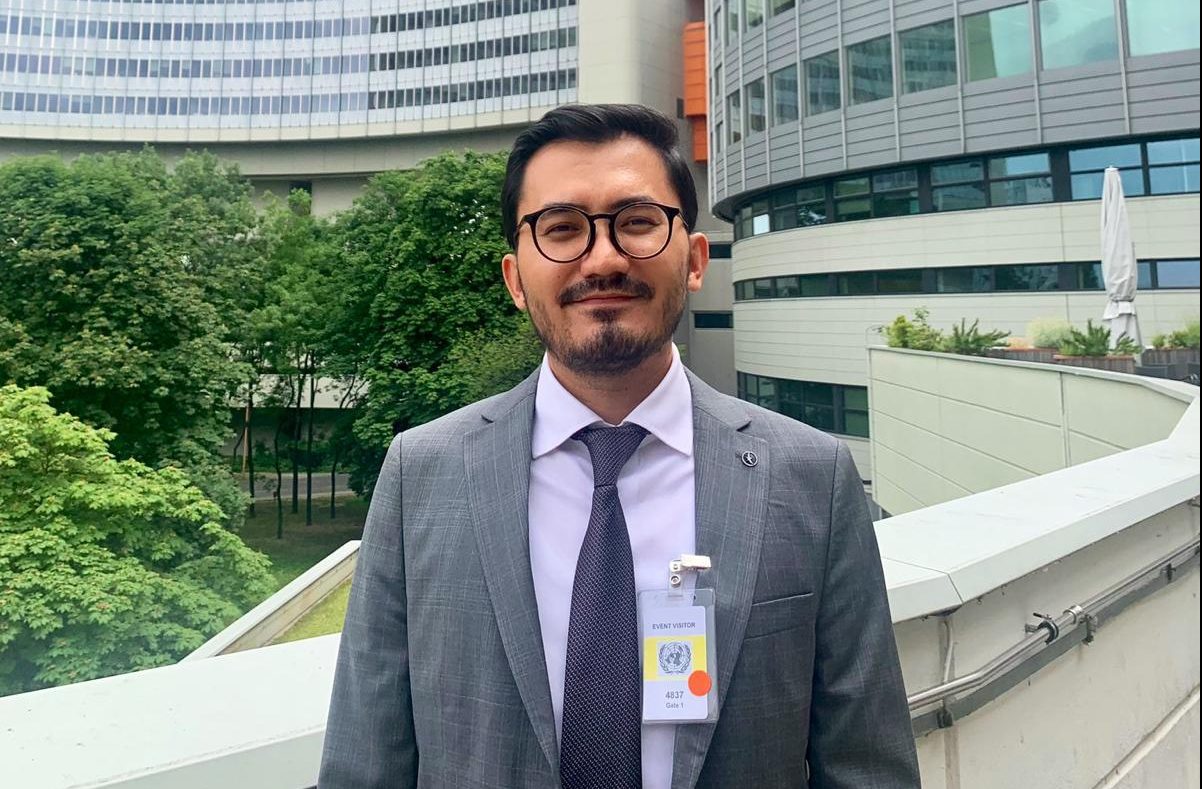
Turkistan Times, September 7 — Istanbul: On September 5, 2026, Katherine Davies, host of the Save Democracy podcast, held an important conversation with Yalkun Uluyol, a China researcher at Human Rights Watch. Marking ten years since the severe escalation of the Chinese government’s systematic repression and genocidal policies in the Uyghur Autonomous Region, the discussion examined how China has extended its network of repression beyond the region and is systematically isolating the Uyghur diaspora in democratic countries through transnational repression.
According to Uluyol, Human Rights Watch published a new report on China’s transnational repression in early August 2026. Based on extensive interviews and investigations conducted in Australia in April and May 2026, the report documents in detail human rights abuses carried out by China within democratic countries.
Since 2014, numerous independent sources have reported that more than one million Uyghurs in the region were confined in camps under high-tech surveillance. Uyghurs’ freedom to practise their religion and use their language has been restricted, while forced labour and coercive birth-control measures have intensified. Although Chinese authorities have sought to justify these practices as “counterterrorism” and “vocational training,” the international community has continued to condemn them as crimes against humanity.
Uluyol said the most severe phase of the repression began in August 2016. From that point onward, the Chinese government began targeting Uyghurs, Kazakhs and other Turkic Muslims on a large scale through arbitrary detention, lengthy prison sentences, family separation and forced assimilation into Chinese culture. At the same time, it sealed the region off from the outside world and treated residents’ communication with relatives abroad as a serious crime.
This systematic severing of communication has left many Uyghurs abroad completely cut off from their relatives. Uluyol stressed that many Uyghurs are now attempting to reunite with their families after a decade of separation, but the Chinese government is exploiting the diaspora’s vulnerability to exert pressure on them overseas, violating their freedom of expression and right to family life.
Drawing on his own experience, Uluyol described how this systematic abuse could devastate an entire family. In 2016, he was an ordinary international student studying in Türkiye. His visit to his homeland that summer became his last. Beginning in September 2016, his relatives and friends back home started removing him from Chinese social media. When he called, they would hang up as soon as they heard his voice and tell him: “Do not call us again.”
As a result, Uluyol lost contact with his entire extended family. His grandmother died in 2018 and his grandfather in 2022. He had been unable to hear his grandmother’s voice for two years before her death and learned of her passing only with great difficulty through his father. This tragedy has become a shared fate for thousands of members of the Uyghur diaspora.
Uluyol’s father, Memet Yaqup, was an ordinary trader who transported melons from Hami to Guangzhou and exported them to Southeast Asia. He had no political profile and was simply an educated citizen working to support his family. Nevertheless, he suddenly disappeared in June 2018. It took Uluyol two full years to determine whether his father was still alive.
In 2020, Uluyol learned that his father was being held in a political re-education camp in Hami. Two years later, in 2022, he discovered that his father had been sentenced to 16 years in prison and his maternal uncle to life imprisonment. The charges against them, whether they were ever brought before a court and whether they had legal representation remain unknown. Their families were denied any form of due process. Since 2024, Uluyol has received no new information about his father’s health or whereabouts.
Faced with international pressure and mounting evidence, the Chinese government has in recent years begun arranging propaganda tours intended to show that conditions in the Uyghur region have “returned to normal.” Diplomats, journalists and some Uyghurs holding foreign citizenship are invited on staged tours conducted under strict surveillance. These tours seek to portray Uyghurs living under systematic repression as “dancing exotic creatures.”
Uyghurs who join these staged propaganda tours are picked up at the airport and taken through tightly controlled two-week itineraries. Even Uyghurs who are foreign citizens are required to speak only Chinese—Mandarin—with one another during the trip. Although they are shown selected mosques as evidence of religious freedom, some participants who independently visited other mosques found them closed. These activities are designed solely to conceal China’s abuses.
More seriously, Uluyol interviewed politically inactive, ordinary Uyghurs holding Australian passports who had recently visited their homeland to see relatives. He revealed that they had been subjected to intensive interrogation by Chinese police. One interviewee said they had been questioned more than 12 times, with one interrogation lasting over seven hours. Police demanded the addresses and telephone numbers of Uyghur activists abroad, particularly in Australia, and threatened the safety of the interviewees and their families.
This systematic transnational repression is not limited to political activists. It also targets weekend schools established in Western countries to preserve the Uyghur language and culture. The Chinese government views these cultural networks as spaces that strengthen diaspora cohesion and therefore seeks to collect information about them and obstruct their activities. Meanwhile, education in the Uyghur region has been forced entirely into Chinese, to the extent that even children in the streets can no longer speak their mother tongue.
China’s transnational repression is being further institutionalized through new legal mechanisms. In July 2026, the Chinese government enacted a law titled the “New Law on Promoting Ethnic Unity and Progress.” The law claims that China has the authority to punish those deemed to have undermined ethnic unity, even when such actions take place abroad. Through this legislation, China is seeking to assert that its laws apply beyond its national borders.
The victims of such laws include Chinese international students. Tara Zhang Yadi, a young Chinese student studying in France who advocated for Tibetan rights, was immediately arrested upon returning to China and faced a lengthy prison sentence. Her case demonstrates that the Chinese government targets not only Uyghurs but any citizen who departs from its officially promoted ideology and expresses dissenting views abroad.
Explaining why China engages in repression on such an extraordinary scale, Uluyol described it as the Chinese Communist Party’s severe “paranoia” over the security of its rule. Under Xi Jinping, China has become an intensely authoritarian state. Any identity viewed as a threat to the absolute leadership and ideological unity of the Chinese Communist Party—whether Uyghur identity, the religious freedom of Tibetan monks, the faith of underground Catholics or university students who raised blank sheets of paper to protest China’s “zero-COVID” policy—immediately becomes a target of repression.
China’s destruction of Hong Kong’s democracy over the past five years illustrates the speed of this authoritarian drive. Six years after the adoption of Hong Kong’s national security law, people are being handed lengthy prison sentences merely for commemorating victims of the Tiananmen massacre. Jimmy Lai, founder of Apple Daily, was sentenced to 20 years in prison simply for doing his job and reporting the truth.
Transnational repression is not unique to the Chinese government. It has become a new global threat used by authoritarian states such as Russia and Iran to silence dissidents in democratic countries. This systematic intimidation and persecution exploits gaps in the legal systems of many countries. Although numerous democratic governments have established mechanisms against foreign interference, these abuses often do not fully fall within existing criminal-law provisions. Special legislation is therefore needed to combat transnational repression.
Uluyol also stressed the need for the international community to restrict products linked to China’s forced-labour system. The Uyghur region supplies 80 percent of China’s cotton, 25 percent of global cotton production, 10 percent of the world’s aluminium and 35 percent of solar panels. Behind these products lies the forced labour of thousands of Uyghurs. Western governments must adopt systematic restrictions to avoid becoming complicit in these abuses.
At the end of the interview, the Human Rights Watch researcher called on members of democratic societies to reach out to their Uyghur, Tibetan and Hong Kong neighbours living abroad, ask about their well-being and stand in solidarity with them. Even a small gesture of warmth can give them a sense of safety in the free world. Citizens can also contribute to ending the repression by writing to their members of parliament, pressing them to act and demanding concrete measures to stop China’s crimes against humanity.