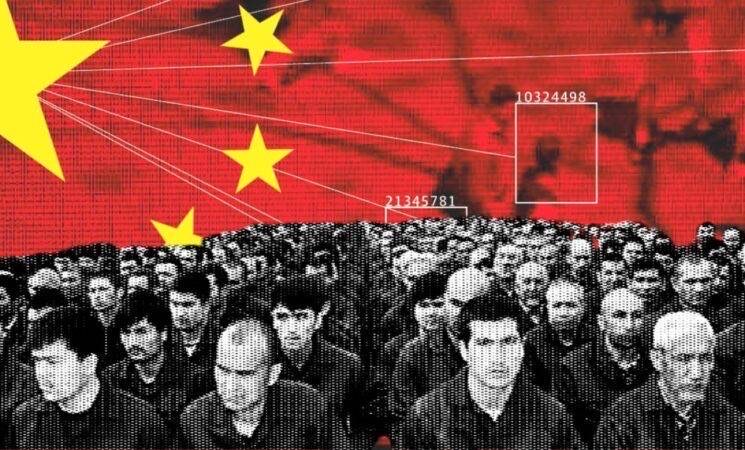
Turkistan Times, September 11, 2026
The attacks in the United States on 11 September 2001 did not begin China’s repressive policy in East Turkistan. Its intellectual and administrative foundations were already established during the 1990s. The attacks offered Beijing something different: an opportunity to recast a domestic political question, previously described as “separatism” and “illegal religious activity,” as a front in the global war on terror. Controls directed at Uyghurs thereby acquired a new vocabulary, international validation, and a legal framework that expanded over time.
This article argues that the Chinese government exploited the post-September 11 environment in four connected ways. It generalized from the conduct of specific armed groups to the Uyghur population as a whole. It associated peaceful political expression, religious practice, and ethnic identity with “extremism.” It used the American and United Nations listings of the East Turkistan Islamic Movement ETIM as political validation for domestic repression. Finally, it converted measures that should have been exceptional and temporary into a durable system of surveillance, mass deprivation of liberty, and coerced transformation of identity. This analysis does not deny that violent threats existed. It distinguishes the investigation of specific crimes from the collective suspicion of a people.
The article compares official Chinese documents, Shanghai Cooperation Organisation and United Nations records, United States government and court materials, and research and reporting published in English, Turkish, Arabic, Chinese, and Uyghur. Figures and causal claims in Chinese official documents are treated as state assertions that reveal how policy was justified, not as independently established facts. The article uses “East Turkistan”; Chinese official documents call the territory the “Xinjiang Uyghur Autonomous Region.”
The central analytical concept is securitization. When political authorities represent an issue as an existential danger to the state or society, they can make measures outside ordinary politics and law appear necessary. A recent Turkish-language study of the Uyghur case shows how discourse and practice reinforce each other: threat language legitimizes surveillance and detention, while expanded surveillance produces more people classified as threats.[12]
Securitization before September 11
Starting the history in 2001 obscures an older continuity. After the 1990 Baren incident, Beijing increasingly placed political protest, independent religious organization, and national claims in East Turkistan within the category of “separatism.” The “Strike Hard” campaigns begun in 1996, the political re-education of clerics, state management of mosques, and restrictions on Uyghur-language publishing all predated September 11. Human Rights Watch’s 2005 report documented a multilayered structure of licensing, surveillance, and punishment that regulated Uyghur religious life.[7] An international framework was also taking shape before the attacks. China, Russia, and four Central Asian states signed the Shanghai Convention on Combating Terrorism, Separatism and Extremism on 15 June 2001.[1] The convention placed three concepts with different legal elements and political meanings within a single cooperation system. September 11 therefore did not create a new policy. It accelerated a regional security framework already under construction and supplied it with global political force.
Amnesty International documented this continuity from within the period in a March 2002 report. It expressed concern about the merger of new counterterrorism provisions with an ongoing crackdown on “terrorist, separatist and illegal religious activities,” while also recognizing the duty of states to protect people from violent crime.[2] The distinction is essential: the duty to provide security does not remove the constraints of human rights law.
The change in official language
Official language changed with particular speed. On 18 September 2001, Chinese Foreign Ministry spokesman Zhu Bangzao said, in substance, that if the United States sought China’s support against terrorism, China was entitled to expect American understanding and support for its own struggle against what it called “national separatism and terrorism.”[12] The statement exposed a diplomatic logic of exchange: Beijing would cooperate over Afghanistan and international terrorism, while seeking acceptance of its conduct in East Turkistan within the same frame.
On 21 January 2002, China’s State Council Information Office issued a document titled “East Turkistan Terrorist Forces Cannot Get Away with Impunity.”[3] It claimed that more than 200 incidents between 1990 and 2001 had killed 162 people and injured more than 440. These were official figures, produced in an information environment that made adequate independent verification difficult.
An Arabic-language Reuters report published by Al Jazeera on the same day recorded that Beijing directly linked Uyghur militants to Osama bin Laden while seeking international support. It also noted that the United States had not yet accepted that connection.[4]
The shift was more than lexical. A person described as a separatist may, at least in principle, have claims debated through the history of government, sovereignty, and national rights. A person described as a terrorist is pushed outside politics; the presumed danger displaces the grievance. Uyghur complaints about language, religion, inequality, and autonomy were consequently submerged beneath a security narrative. Sean Roberts argues that this frame stripped Uyghur historical and political grievances of legitimacy and reduced them to an ideology deemed unworthy of explanation or negotiation.[11]
The ETIM listing and the problem of evidence
A credible account must acknowledge that some individuals and organizations acting in the name of the Uyghur cause have used violence. The UN Security Council sanctions narrative states that ETIM was listed on 11 September 2002 for association with Al-Qaida and the Taliban and describes the organization as having used violence in pursuit of an independent state.[6] Every government has a legitimate duty to prevent violent attacks. Evidence about a particular organization, however, does not produce a lawful judgment about an entire people. In 2002 Washington designated ETIM under United States counterterrorism authorities and supported its UN listing.[5][6] That decision supplied China with valuable diplomatic validation. ETIM was never placed on the statutory US Foreign Terrorist Organization FTO list. In 2020, the Secretary of State revoked a separate designation under immigration law that had identified it as a “terrorist organization.”[17] These legal distinctions were often erased in later political messaging.
The cases of Uyghur detainees at Guantánamo illustrate the danger of list-based policy. In 2008 a US federal appellate court vacated the designation of Huzaifa Parhat as an “enemy combatant.” It found that key government materials provided too little information to assess their sources and reliability. It was undisputed that Parhat was not a member of Al-Qaida or the Taliban and had not engaged in hostile action against the United States or its allies.[10] The judgment did not disprove every allegation concerning ETIM. It showed how a politically sourced suspicion can become prolonged deprivation of liberty when a terrorism label escapes meaningful judicial testing.
The expansion of suspicion
The most important domestic benefit of the post-September 11 frame was an enlarged target. Searching for a person preparing violence is fundamentally different from searching an entire society for “signs of extremism.” Chinese laws and regulations nevertheless drew terrorism, extremism, separatism, foreign contact, and “abnormal” religious expression close together.
Beards, clothing, prayer, religious materials, relatives abroad, certain communications applications, and objections to government policy could therefore trigger security scrutiny without evidence of violence.[14][15]
This is the second stage of securitization. Threat discourse first legitimizes punishment; the bureaucracy then manufactures “risky” persons who fit that discourse. Big-data platforms, compulsory biometric collection, checkpoints, party cadres living in family homes, and political trustworthiness categories measure identity and social networks rather than a crime committed by an individual. Human Rights Watch’s 2018 investigation documented mass surveillance and collective punishment embedded in the daily life of Uyghurs, Kazakhs, and other Turkic Muslims.[15]
Uyghur-language sources identified the political problem early. In a 2016 Radio Free Asia report, Uyghur human rights advocates condemned the September 11 attacks while insisting that no government had the right to use counterterrorism to suppress peaceful political opposition.[18] That distinction provides the proper test. Measures directed at violence, based on evidence, and subject to judicial review may be legitimate. Generalized suspicion based on national or religious identity becomes discrimination and collective punishment.
The permanent legal exception
The most durable consequence was the absorption of wartime language into permanent law and institutions. China adopted a national Counterterrorism Law in 2015, followed in East Turkistan by regional implementation measures and the 2017 Regulation on De-extremification.[14] “Extremism” became a broad category capable of encompassing ideas and conduct without a direct relationship to violence. UN experts warned that vague definitions enabled interference with lawful religious practice, expression, and privacy.[20] The Chinese State Council’s 2019 white paper explains the system’s internal logic with unusual clarity. It connects the post-September 11 spread of global terrorism and extremism to East Turkistan, presents counterterrorism, national security, religious, and regional “de-extremification” rules as a single legal system, then gives priority to “preventive counterterrorism” and defends “vocational education and training centres” as one of its instruments.[13] The government describes these centres as lawful, voluntary, and protective of rights.
Independent scrutiny reached a different conclusion. The UN Office of the High Commissioner for Human Rights found in 2022 that serious violations had been committed against Uyghurs and other predominantly Muslim peoples in the context of China’s counterterrorism and “counter-extremism” policies. It concluded that the extent of arbitrary and discriminatory deprivation of liberty may constitute international crimes, particularly crimes against humanity.[16] The security vocabulary legitimized after September 11 had, by 2017, become more than propaganda. It became an administrative technology for managing mass detention.
Control beyond the border
The post-September 11 framework also strengthened transnational control. Members of the Shanghai Cooperation Organisation institutionalized information sharing, apprehension, and return in cases framed as “terrorism, separatism and extremism.”[1] Cooperation directed at a specific violent crime can be legitimate.
Equating separatism with terrorism without requiring violence, however, exposes asylum seekers and peaceful activists to refoulement. Human Rights Watch’s 2005 report recorded examples of Uyghurs returned from Central Asia and Nepal despite risks of secret trial and severe punishment.[7]
The Guantánamo files show that Western governments also helped stabilize the narrative. In the urgent cooperation environment after the attacks, information originating with China entered American detention decisions before a court later questioned its reliability.[10] The problem was therefore not only Chinese propaganda. The international system’s tendency to build lists quickly, rely on secret evidence, and prioritize interstate cooperation over individual rights created an opening for misuse.
A Chinese-language analysis published by Taiwan’s Institute for National Defense and Security Research in 2018 connects the foreign and domestic dimensions. It argues that Beijing used the post-September 11 climate to promote an asserted link between Uyghur independence activism and Islamist violence in Central Asia, and later presented “re-education” as preventive counterterrorism.[19] The study also places East Turkistan’s strategic position in Belt and Road corridors within the material background of control. This point directs attention beyond ideology to territory, borders, resources, and transit routes.
Political returns and long-term effects
September 11 offered Beijing three political resources. The first was linguistic. Replacing a debate about a “national question” with a narrative of “global terrorism” made critics easier to portray as indifferent to security. The second was institutional. Listings, conventions, and interstate cooperation enabled restrictions on Uyghur activity beyond China’s borders. The third was administrative. Because prevention searches for danger before a crime occurs, it expanded the state’s authority to decide who was trustworthy and who required “education” without a clear stopping point.
These gains are not synonymous with security. Michael Clarke’s research shows that violent Uyghur separatism cannot be understood without political and civil rights, regional inequality, and grievances associated with Chinese integration policies.[9] James Millward’s 2004 assessment likewise acknowledged violence while questioning the scale of the threat in the official account and the transparency of its evidence.[8] A counterterrorism policy that excludes the causes of grievance from discussion may produce short-term quiet while deepening distrust and resistance over time.
The finding of exploitation does not depend on guessing intent. It rests on the relationship between means and ends. Lawful counterterrorism should be confined to defined violent conduct and governed by clear law, independent judicial review, necessity, proportionality, and non-discrimination. In the Uyghur case, national and religious identity became risk indicators; the boundary between administrative detention and criminal punishment blurred; family and foreign contact generated suspicion; and independent scrutiny was obstructed. These characteristics show a security policy exceeding its proper limits and becoming an instrument for the political remaking of society.
Conclusion
The most important effect of September 11 on Chinese policy was discursive and institutional rather than military. It allowed Beijing to place an older problem of territorial control, national integration, and political obedience within a global war without a defined boundary. Evidence concerning ETIM’s violence and international links explains part of the security picture. It cannot authorize the targeting of an entire Uyghur people, its religious life, or its peaceful political expression.
More than two decades later, the frame endures because it is embedded in law, policing, data technology, “education” centres, diplomacy, and border cooperation. Changing a single list is therefore insufficient. Counterterrorism must be limited to clearly defined offences connected to violence; vague definitions of “extremism” should be removed; independent judicial and international scrutiny must be permitted; and Uyghur political, cultural, and religious claims must be addressed as rights rather than security risks. The lesson of September 11 is not to minimize terrorism. It is to prevent the name of counterterrorism from becoming an open-ended grant of power over an entire people.
Sources:
[1] Shanghai Cooperation Organisation. The Shanghai Convention on Combating Terrorism, Separatism and Extremism. 15 June 2001. English. Source link
[2] Amnesty International. China’s Anti-Terrorism Legislation and Repression in the Xinjiang Uighur Autonomous Region. 22 March 2002. English. Source link
[3] State Council Information Office of the People’s Republic of China. East Turkistan Terrorist Forces Cannot Get Away with Impunity. 21 January 2002. Chinese. Source link
[4] Reuters and Al Jazeera Arabic. China Links Xinjiang Militants to bin Laden. 21 January 2002. Arabic. Source link
[5] United States Department of State. Designation of the Eastern Turkistan Islamic Movement Under Executive Order 13224. 11 September 2002. English. Source link
[6] United Nations Security Council. Narrative Summary for the Eastern Turkistan Islamic Movement QDe 088. English. Source link
[7] Human Rights Watch. Devastating Blows: Religious Repression of Uighurs in Xinjiang. 11 April 2005. English and Chinese. Source link
[8] James A. Millward. Violent Separatism in Xinjiang: A Critical Assessment. East-West Center Washington. 2004. English. Source link
[9] Michael Clarke. China’s War on Terror in Xinjiang: Human Security and the Causes of Violent Uighur Separatism. Terrorism and Political Violence, 20(2). 2008. English. Source link
[10] United States Court of Appeals for the District of Columbia Circuit. Parhat v. Gates, 532 F.3d 834. 30 June 2008. English. Source link
[11] Sean R. Roberts. The War on the Uyghurs: China’s Internal Campaign Against a Muslim Minority. Princeton University Press. 2020. English. Source link
[12] Mehmet Erkan Kıllıoğlu. Doğu Türkistan, Uygurlar ve Çin: Bir Güvenlikleştirme Analizi. Uluslararası Uygur Araştırmaları Dergisi, 27. 2026. Turkish. Source link
[13] State Council Information Office of the People’s Republic of China. 新疆的反恐 去极端化斗争与人权保障. 18 March 2019. Chinese. Source link
[14] Xinjiang Uyghur Autonomous Region Regulation on De-extremification. 30 March 2017. Chinese with English translation. Source link
[15] Human Rights Watch. Eradicating Ideological Viruses: China’s Campaign of Repression Against Xinjiang’s Muslims. 9 September 2018. English; Arabic, Chinese, Turkish and Uyghur summaries. Source link
[16] Office of the United Nations High Commissioner for Human Rights. Assessment of Human Rights Concerns in the Xinjiang Uyghur Autonomous Region, People’s Republic of China. 31 August 2022. English. Source link
[17] United States Department of State. Revocation of the ETIM Designation Under Section 212 of the Immigration and Nationality Act. Federal Register. 20 October 2020. English. Source link
[18] Radio Free Asia Uyghur Service. Uyghurs Mark the September 11 Attacks and Condemn the Misuse of Counterterrorism. 9 September 2016. Uyghur. Source link
[19] Institute for National Defense and Security Research Taiwan. 中國以再教育營推動反恐之觀察. 14 December 2018. Chinese. Source link
[20] United Nations Special Procedures. Joint communication to the Government of China on the counter-terrorism legislative framework and human rights. 19 December 2022. English. Source link