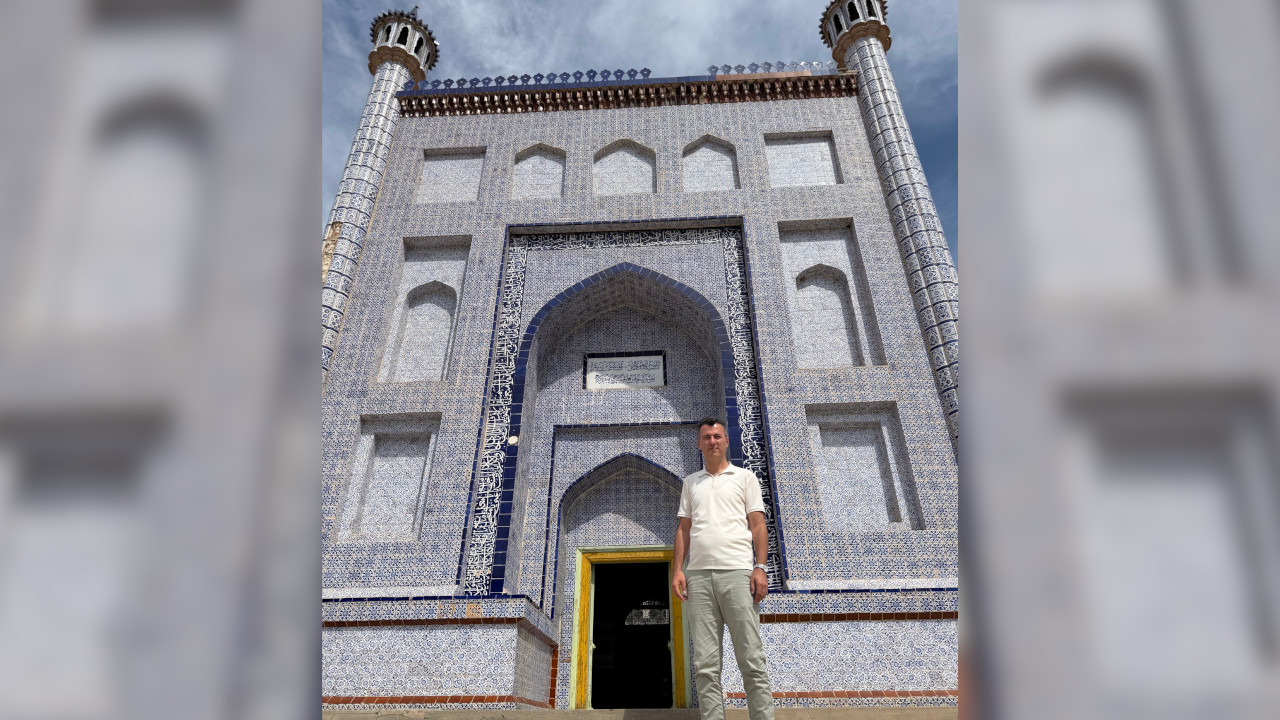
Assoc. Prof. Dr. Ahmet Özkan shared his observations from Ghulja, Kashgar, and Urumqi following a nearly week-long trip to East Turkestan. Özkan conveyed his notes regarding the condition of mosques, language usage, and passport controls.
September 15, 2026
Following a nearly week-long trip to East Turkestan, academic Assoc. Prof. Dr. Ahmet Özkan shared his observations made in Ghulja, Kashgar, and Urumqi on his social media account. Throughout the trip, Özkan relayed various observations ranging from the state of mosques and language usage to passport controls and opportunities for worship.
Stating that the trip, which they undertook entirely through their own means, had concluded, Özkan expressed that they had the opportunity to travel and see many places in Ghulja, Kashgar, and Urumqi.
Özkan emphasized that they "could not see anything positive in terms of freedom of language, religion, and worship" in the cities they visited, noting that they witnessed the people in the region being kept under surveillance through means such as cameras, audio recording, phone applications, and internet restrictions.
Stating that all the mosques in the areas they visited were closed for worship, Özkan noted that the entrance doors of some mosques were opened at certain hours of the day, but even during those hours, entry was not permitted.
Özkan also noted his observation that the signboards in all the cities they visited had been translated into Chinese and that the spoken language was Chinese. He stated that they themselves were subjected to passport controls many times throughout the trip.
Beytullah Mosque in Ghulja
Özkan's first stop in East Turkestan was the Beytullah Mosque in Ghulja, also known as Yining city.
Stating that the surroundings of the mosque were cordoned off and that work was being done inside, Özkan conveyed that when they asked about the scope of the work, they were told the mosque was undergoing restoration.
Id Kah Mosque in Kashgar
Özkan's next stop was the Id Kah Mosque in Kashgar.
Stating that the mosque was open at certain hours for touristic visits, Özkan expressed that it was not possible to enter the mosque and pray during these times.
Özkan conveyed that they were not allowed to enter the mosque for two consecutive days, but on the third day, they were permitted to enter to pray upon presenting their passports.
Tomb of Satuk Bughra Khan in Artush
Stating that another site to visit in Kashgar was the tomb of Abdulkerim Satuk Bughra Khan located in Artush, Özkan said that after a journey of about an hour, although they reached a point very close to the tomb, they were not allowed to enter the area and could not complete the visit.
Tomb of Mahmud al-Kashgari
Another historical site Özkan visited was the tomb of Mahmud al-Kashgari.
Stating that they entered the complex where the tomb is located but the paths leading to the tomb were blocked off, Özkan expressed that despite this, they managed to reach the door of the tomb.
Conveying that they could not enter because the doors of the tomb were locked, Özkan noted that the campus had a neglected and ruined appearance.
Tomb of Yusuf Khass Hajib open to visitors
Stating that their last visiting point in Kashgar was the tomb of Yusuf Khass Hajib, Özkan noted that they did not encounter any problems during this visit and that the tomb was open to visitors.
The final city in Özkan's trip was Urumqi, one of the important commercial centers of East Turkestan.
Stating that they saw many mosques in Urumqi, Özkan expressed that all of these mosques were closed and presented an image of being "abandoned to their fate."
Sharing his observations regarding his trip to East Turkestan, Özkan included in his notes the passport controls and various restrictions they encountered throughout the journey, alongside his observations regarding the language, worship, and religious sites in the region.
Source: Mepa News