Editorial team | October 6, 2026 | Turkistan Times translation | Source: Original article — Mizane.info
As human rights organisations continue to document arbitrary detention, religious restrictions and the erasure of Uyghur culture in Xinjiang, China is also developing a massive tourism strategy for the region. In 2025, Xinjiang recorded a historic high of 323 million tourist visits.
A culture that is both disparaged and put on display? In bazaars, historic neighbourhoods and tourist itineraries, Uyghur traditions have become a selling point, even as Human Rights Watch says repression targeting Uyghurs remains severe in Xinjiang. The recent opening of the region’s first Starbucks cafés, including one at Ürümqi’s Grand Bazaar, underscores this contradiction.
A tourism boom organised by Beijing
The contrast is striking. Xinjiang’s regional government announced that the region recorded 323.13 million tourist visits in 2025, an increase of 8% over the previous year. Tourism spending reached 370.09 billion yuan, approximately US$53 billion. Both figures are records for the region. For 2026, Chinese authorities want to accelerate the sector’s development further, with new investment in winter tourism, specialised itineraries and new tourist sites with the highest national rating.
The government presents tourism as a way to boost employment and encourage exchanges among the region’s different populations. Uyghur culture occupies a central place in this strategy. Food, dances, traditional costumes, the architecture of old neighbourhoods and handicrafts are promoted to Chinese and foreign visitors.
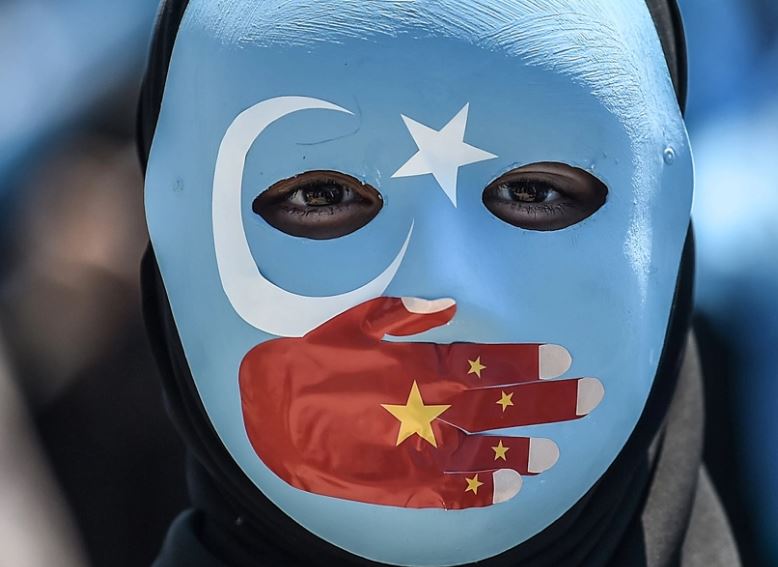
Several human rights defenders denounce a profound contradiction: a culture is turned into a tourism product while its independent religious, linguistic and social expressions remain tightly controlled. As recently as August 27, 2026, Human Rights Watch wrote that Chinese authorities were continuing policies of arbitrary detention, unjust imprisonment, mass surveillance and “cultural and religious erasure”, while seeking to promote an image of normality in Xinjiang.
Starbucks at the Grand Bazaar: A symbol of normalisation
In a striking development, Starbucks opened its first two cafés in Xinjiang, both in Ürümqi, in late September. One is at the Grand Bazaar, an emblematic site of Uyghur culture. The American giant’s arrival immediately sparked controversy in the United States. Republican Representative John Moolenaar, chair of the House of Representatives’ select committee on China, called Starbucks’ decision “morally indefensible” and asked the company to close its stores in the region.
The Guardian notes that the new cafés sell merchandise inspired by local traditional clothing and patterns. For critics of the openings, the symbolism is particularly powerful: a minority culture can be displayed and commercialised while the people who sustain it continue to face severe restrictions.
Beijing rejects these accusations and says its policies in Xinjiang are intended to combat terrorism, ensure social stability and promote economic development.
“A public image of normality”
Human Rights Watch places this tourism development within a broader strategy. The organisation says the decade-long repression of Uyghurs “constitutes crimes against humanity” and emphasises that it continues alongside the authorities’ efforts to promote “a public image of normality in Xinjiang”. HRW recalls, in particular, that at the height of the campaign launched in 2014, approximately one million Uyghurs were arbitrarily detained in so-called “political education” camps.
Tourism figures now give this battle over the region’s image another dimension. Within a few years, Xinjiang has become one of the major destinations promoted by Chinese authorities, recording more than 323 million visits annually. For Beijing, these millions of tourists, new infrastructure and the arrival of international brands demonstrate that the region is peaceful and prosperous.
For defenders of Uyghur rights, however, they illustrate a troubling normalisation: a culture is made highly visible to tourists at the very moment when the people who sustain it continue to face restrictions on their religious, linguistic and cultural freedoms.