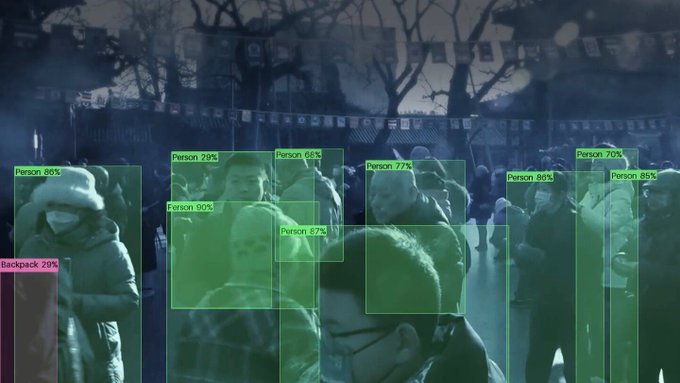
AI analysis of crowds in Beijing. (AP Video/Marshall Ritzel)
Turkistan Times, September 9, 2025
Source: AP News – Chinese surveillance and U.S. tech
Surveillance and Everyday Life in East Turkistan
For millions of Uyghurs in East Turkistan (Xinjiang), life under Chinese rule has become a constant interaction with digital surveillance. Cameras on streets, facial recognition at checkpoints, phone monitoring, and QR-code systems at grocery stores are all part of an intricate network that tracks every movement, every communication, and even seemingly private behaviors. The AP investigation reveals that behind this unprecedented monitoring system are global technology corporations, providing the software, hardware, and artificial intelligence necessary for the Chinese state to scale its control.
Companies such as IBM, Intel, and Nvidia supplied core technologies that were later integrated into mass surveillance operations. IBM’s database systems powered predictive policing algorithms that could flag individuals for “suspicious” activities based on social connections and behavioral patterns. Intel and Nvidia contributed chips essential for AI-driven facial recognition and analytics. These technologies, originally developed for benign commercial or urban management purposes, were adapted to detect religious practices, family connections abroad, and other cultural markers specific to Uyghur identity.
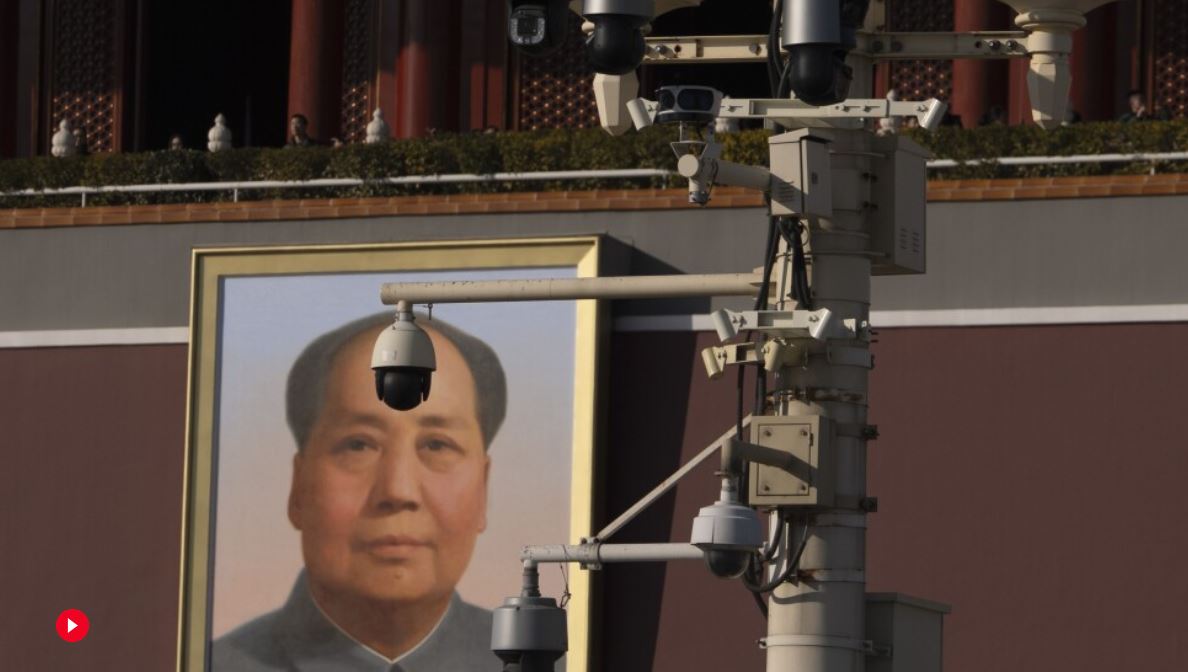
The AP obtained tens of thousands of pages of classified and internal documents that show how U.S. companies designed and marketed systems that became the foundation for China’s digital cage. (AP Video/Serginho Roosblad, Marshall Ritzel)
Corporate Complicity and Human Cost
The human cost of these systems is staggering. Over a million Uyghurs have been detained in internment camps, often arbitrarily, as predictive algorithms flagged them for “re-education” or political indoctrination. Families have been separated, children sent to state-run boarding schools, and cultural traditions monitored and suppressed. In essence, Uyghurs live under a digital ghetto, where even small acts of worship or speaking their native language can trigger scrutiny.
Former engineers and industry insiders interviewed by AP describe a troubling ethical blind spot. While human rights organizations warned that the technology could facilitate mass detention and cultural erasure, many companies continued their partnerships, driven by the profitability of China’s market. As one Uyghur activist put it:
“Our freedoms were stolen through lines of code. Silicon Valley helped design the chains that bind us.”
Beyond East Turkistan, these technologies are now being exported to other authoritarian regimes, raising global concerns about the proliferation of digital authoritarianism. Experts warn that the systems tested in Xinjiang may serve as blueprints for surveillance and repression in other parts of the world.
International Implications and Calls for Accountability
The AP investigation emphasizes that U.S.-developed technologies and patents were integral to the architecture of control in East Turkistan. From AI facial recognition to algorithm-driven social scoring systems, the involvement of global technology firms underscores the complex interplay between innovation and repression. While some collaborations began with innocuous goals, they evolved into tools of ethnic profiling and social control, disproportionately affecting Uyghurs.
Policymakers and human rights advocates argue that these firms may bear responsibility under international law, potentially as accomplices to crimes against humanity. The Council on Foreign Relations has categorized China’s actions in Xinjiang as genocidal, highlighting that mass surveillance enabled by foreign technology was a critical enabler of this repression.
Calls are growing for stricter export controls, corporate transparency, and ethical guidelines for technology transfers. For Uyghurs in East Turkistan, however, these discussions come after years of suffering under a system where identity, faith, and family connections are constantly monitored and scored. The legacy of these technologies is a chilling reminder that innovation without oversight can be weaponized against entire populations, turning everyday life into a digital prison.